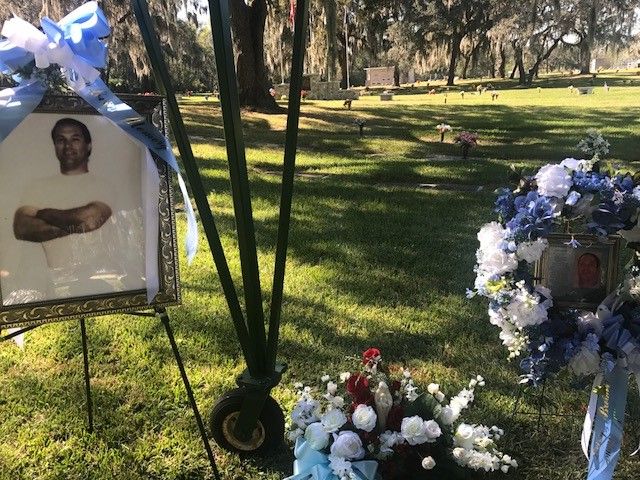
Another year has now passed and despite the relentless efforts of morally and ethically corrupt state employed parasites, I am still alive. To be honest, at this time last year things were not looking too good and I had good reason to think I might not even live to see this new year.
But such is the roller coaster ride we are on. Just when you think you are going over the cliff to your certain death, a sudden twist and turn, and you’re shooting for the moon again. This time last year both the state and federal courts had denied my long pending “actual innocence” appeals, refusing to even look at the virtual wealth of evidence that supported my claim of innocence. I really should not had been surprised as I already knew that even the United States Supreme Court has plainly declared that innocence is not an issue. (Herrera v. Collins, 1992). So, it was not a surprise when the Florida Supreme Court rejected review of my innocence claim in a one sentence footnote, saying that a freestanding claim of innocence cannot be considered.
In several subsequent appeals to the federal courts, they too summarily denied review. Incredibly, the arguments (written brief) before the US Supreme Court, the state of Florida even specifically argued that Florida is not obligated to recognize a “fundamental miscarriage of justice” (actual innocence) claim, as if it is cognizable at all, then it is exclusively a federal claim. That was a disturbing insight into the moral corruption of our state courts, when they arrogantly tell the US Supreme Court that Florida can put innocent people to death if they want to – and in evidently they will.
Confronted with that truth, it wasn’t looking good and once again I had to confront my seemingly inevitable fate of being deliberately put to death for a crime I did not commit. That even evidence substantiating my innocence would not be enough to save me from those who would only too gladly take my life.
Perhaps some higher power was as offended by the state’s arrogance as just when it seemed that my fate was surely sealed yet another unexpected twist gave me renewed hope of winning my freedom within the foreseeable future.
Specifically, under applicable law the prosecutor must fully disclose any and all evidence that might be favorable to the accused. The failure to do so violates an important federal constitutional right, and if it is found that the undisclosed evidence is sufficient enough to undermine confidence in the jury’s verdict, then the conviction must be thrown out and a new trial granted.
In my now pending new appeal before the Florida Supreme Court, we are arguing that the State deliberately violated the law. Much to my surprise the State’s own lawyer actually conceded that the prosecutor did deliberately conceal numerous file folders containing state crime lab records that show that they had actually found hair belonging to the state’s only “key witness” on the alleged murder weapon.
Given that the State’s lawyers never concede an issue, and aggressively fight tooth and nail to win by any means necessary, I was utterly speechless when I read the States concession – and not surprised that when the state lawyer was quickly removed from case shortly after. God forbid that a lawyer for the state should actually be honest!
So now the only real question for the Florida Supreme Court to decide is whether the failure to fully disclose these state crime lab records and DNA evidence might had affected the outcome. In my case the State has consistently conceded that the whole case rested upon the jury believing their one key witness, Frances Smith. So, the question now comes down to if the jury had known that the prosecutor deliberately concealed evidence showing that the only forensic evidence found on the alleged “murder weapon” was hair belonging to Smith, would this have caused the jury to question Smith’s credibility and possibly reject her testimony?
If the Florida Supreme Court finds that this undisclosed evidence would have assisted in discrediting this key witness, then they must throw out my conviction and grant a new trial – which would almost certainly prove impossible and result in my release – freedom.
A ruling should come within the next month or two. So, I begin the New Year with renewed hope that in the not too distant future, after close to 30 years, I will finally win and be free. All things considered that’s not a bad way to start the New Year. At least for the moment I have hope and in here hope is what keeps you going.
Saturday, January 21, 2012

Monday, November 28, 2011
Love Wins – Even on Death Row
Recently a friend of mine sent me a very nice gift – a book by Rob Bell entitled “Love wins: a book about heaven, hell and the fate of every person who ever lived” (Thank you Jan!) Having known me for about 20 years, Jan knows that I enjoy books that are thought provoking. Especially if the subject matter is spiritual. In fact, I initially brought this particular book to his attention after reading a book review in the USA Today newspaper a few months back, but I couldn’t exactly run down to the local bookstore myself, so fortunately Jan knows that it is relatively easy to send books to death row prisoners as all he had to do was order it on Amazon.com and have it shipped directly to me.
This isn’t the first book I received from a friend as I am blessed to have several friends who sent me books recently. But I am writing about this particular book because of the message it provides, one that I have reached myself long ago – that our spiritual evolution is about embracing love, not condemning all of us to hell. Like many others I find the concept of being condemned to hell and subjected to eternal torture to be in conflict with what I believe God really is. If God truly loves even me, then why would he want to beat me over the head until I submit to what some self-righteous and self appointed representative of God tells me a true Christian is?
Many years ago I got to know one of the volunteers that regularly visit death row from churches. They come to save our soul, bless their hearts. Most of these men do so at their own expense and spend many hours each week going from cell to cell, reaching out to the condemned and showing a measure of compassion that reflects a true Christian spirit, and I enjoy the few moments I am able to share with them.
This one volunteer (“Carl”) told me something that has stayed with me since – at the time, I was facing a death warrant (formally scheduling execution) and upon learning of this, Carl came to my cell to see how I was holding up. I was alright, but we go to talk and he commented on how I was actually lucky to be facing then imminent execution, as most people do not really know when they will die and often die suddenly without any opportunity to get their heart right with God.
Anyone who really knows me knows that I’m never at a loss for words, but at that moment, I didn’t really know what to say. The implication was that those unfortunate enough to die without the opportunity to get their heart right with God would be condemned to hell for all eternity, no matter how good of a person they might have been, while at the same time a presumably “cold blooded killer” who by virtue of his condemnation and imminent execution would go straight to heaven because he had the chance to get his heart right with God.
Myself, I don’t buy that argument and it really makes no sense. But I’m not articulate enough to explain why this whole concept of condemning the righteous to eternal damnation while rewarding the worst of sinners with eternal heaven makes no sense and so I thoroughly enjoyed reading Rob Bell’s book “Love wins” as it explains beautifully what I have come to believe – that the whole concept of condemning anyone to hell for all of eternity is nothing but a fabrication by those “Christians” who want to use fear and intimidation to coerce others to believe only what they say the nature of God is.
Everybody has the fundamental right to believe what they want and for the most part, each if us find God in our own way. I prefer to believe in a God that embraces love, mercy and compassion towards all men, even the worst of sinners, as by believing God of that nature too I can hope that men will evolve to reflect that nature too. I’m certainly not perfect – but knowing that I’m not getting beaten over the head every time I do slip is comforting.
If in the end I am put to death for a crime I did not commit (please check with www.southerninjustice.com ) then it will be because of the imperfection of a judicial process corrupted by men. But for now, as I remain entombed in a man made hell few could begin to imagine, my real struggle is to rise above the anger and bitterness that tries to consume me. In reading books like “Love wins” it gives me that strength by reassuring me that in the end, it will be love – and not hate – that wins. That’s a concept I can embrace.
Mike Lambrix
This isn’t the first book I received from a friend as I am blessed to have several friends who sent me books recently. But I am writing about this particular book because of the message it provides, one that I have reached myself long ago – that our spiritual evolution is about embracing love, not condemning all of us to hell. Like many others I find the concept of being condemned to hell and subjected to eternal torture to be in conflict with what I believe God really is. If God truly loves even me, then why would he want to beat me over the head until I submit to what some self-righteous and self appointed representative of God tells me a true Christian is?
Many years ago I got to know one of the volunteers that regularly visit death row from churches. They come to save our soul, bless their hearts. Most of these men do so at their own expense and spend many hours each week going from cell to cell, reaching out to the condemned and showing a measure of compassion that reflects a true Christian spirit, and I enjoy the few moments I am able to share with them.
This one volunteer (“Carl”) told me something that has stayed with me since – at the time, I was facing a death warrant (formally scheduling execution) and upon learning of this, Carl came to my cell to see how I was holding up. I was alright, but we go to talk and he commented on how I was actually lucky to be facing then imminent execution, as most people do not really know when they will die and often die suddenly without any opportunity to get their heart right with God.
Anyone who really knows me knows that I’m never at a loss for words, but at that moment, I didn’t really know what to say. The implication was that those unfortunate enough to die without the opportunity to get their heart right with God would be condemned to hell for all eternity, no matter how good of a person they might have been, while at the same time a presumably “cold blooded killer” who by virtue of his condemnation and imminent execution would go straight to heaven because he had the chance to get his heart right with God.
Myself, I don’t buy that argument and it really makes no sense. But I’m not articulate enough to explain why this whole concept of condemning the righteous to eternal damnation while rewarding the worst of sinners with eternal heaven makes no sense and so I thoroughly enjoyed reading Rob Bell’s book “Love wins” as it explains beautifully what I have come to believe – that the whole concept of condemning anyone to hell for all of eternity is nothing but a fabrication by those “Christians” who want to use fear and intimidation to coerce others to believe only what they say the nature of God is.
Everybody has the fundamental right to believe what they want and for the most part, each if us find God in our own way. I prefer to believe in a God that embraces love, mercy and compassion towards all men, even the worst of sinners, as by believing God of that nature too I can hope that men will evolve to reflect that nature too. I’m certainly not perfect – but knowing that I’m not getting beaten over the head every time I do slip is comforting.
If in the end I am put to death for a crime I did not commit (please check with www.southerninjustice.com ) then it will be because of the imperfection of a judicial process corrupted by men. But for now, as I remain entombed in a man made hell few could begin to imagine, my real struggle is to rise above the anger and bitterness that tries to consume me. In reading books like “Love wins” it gives me that strength by reassuring me that in the end, it will be love – and not hate – that wins. That’s a concept I can embrace.
Mike Lambrix
Thursday, November 17, 2011
This is an article Mike liked and wanted to share with you...
I Committed Murder
Sep 25, 2011
Newsweek
By Michael Daly
For the anonymous executioners of death row, the ‘high’ of pulling the lever is often followed by a lifetime of doubt.
Only a fellow executioner like 59-year-old Jerry Givens would know how crushingly hard it will continue to be for those who put Troy Davis to death last week even as he continued to insist on his innocence.
“The executioner is the one that suffers,” Givens says on the day after Davis’s execution in Georgia. “The person that carries out the execution itself is stuck with it the rest of his life. He has to wear that burden. Who would want that on them?”
During the 17 years that Givens worked as an executioner in Virginia, he put 62 men to death. And each time, he felt what he calls “the executioner high,” an adrenalized state that always imparted a merciful unreality as he sat behind a curtain and pulled the lever, releasing a fatal cocktail of three drugs that seemed to him less humane than the electricity he previously unleashed by pulling a switch. The chemicals of lethal injection always took eternal minutes longer than the deadly jolt from the electric chair.
“I had to transform myself into a person who would take a life,” Givens says. “That transformation might linger for a while. You might be on that for three weeks.”
He figures this same high visited the executioners in Georgia who dispatched Davis last week, in accordance with the state’s Administrative and Execution Procedures, Lethal Injection, Under Death Sentence. “I guess those people last night were on that emotional executioner high.” He says the high is all the more intense with cases that receive public attention, such as when he dispatched the Briley brothers in Virginia in the mid-1980s after their seven-month spree of rape and at least 11 murders.
But once the protective high wears off, the executioner is left with the reality that he has taken a life. And in the case of condemned prisoners like Davis, who maintain their innocence to the very end, there is always that lingering doubt. The only certainty is that the penalty is irrevocable.
“You take an innocent life—that means I committed murder,” Givens says.
If Troy Davis wasn’t in fact innocent, there is a near certainty that some prisoners presently on death row are. A recent tabulation by the Death Penalty Information Center showed that 138 prisoners were exonerated after being sentenced to death between 1973 and 2010. That included five in Georgia, the state that remained determined to put Davis to death despite the numerous reasonable doubts regarding his guilt and the momentous public outrage joined by such varied public figures as Bishop Desmond Tutu and Sean “P. Diddy” Combs.
While the prosecutors, jurors, and judge all had their say in putting a prisoner on death row, the task of actually carrying out the sentence falls to an executioner with no idea of what was said and done at trial. “You don’t know,” Givens says. “You don’t take part in the trial. You weren’t there to witness it.” And even cases of undisputed guilt can continue to haunt executioners to the end of their days. In all 62 of Givens’s cases in Virginia, the official paperwork bore a word that has stayed with him. “When you look at the death certificate it says, ‘HOMICIDE,’” he notes. “How can it leave you?”
His career as an executioner ended 11 years ago, when he was convicted on charges of perjury and money laundering unrelated to his work—going to prison himself for four years, swearing he was innocent. Givens is now a truckdriver, but the residual horror of his time as an executioner flashed back to him as he followed from afar the news reports of the Davis case. “Whenever they have an execution, I get back to when I used to do them. It’s human nature.”
Also in human nature is a cumulative revulsion to taking life even when it is legally sanctioned. Those who finally have been driven to campaign against the death penalty include not just executioners like Givens, but a number of wardens who found it unbearable even to give the order that the executioners carry out. A longtime warden of San Quentin prison in California began to choke up when asked about four executions over which she presided, particularly the execution of Manuel Babbitt, a decorated Vietnam vet who killed a 78-year-old woman in a burglary. Babbitt’s brother had turned him in after false assurances that the state would not seek the death penalty. “The brother had to come that night and watch him be executed,” Jeanne Woodford, the former warden, recalls.
The 58-year-old lifelong corrections official says that presiding over executions actually becomes more difficult over time. “You have to appear normal,” she says. “You have to appear in control ... You try to tell yourself and your staff that this is the law.”
Her career of nearly four decades culminated with her 2004 appointment as the director of all of California’s prisons, but soon afterward, she resigned.
“I knew I couldn’t carry out another execution,” she says. “I knew I just couldn’t do it.”
She says that, from the start, “it never made sense to me that we would believe killing a human being would make up for killing a human being.”
Woodford has concluded that capital punishment also makes no fiscal sense. She figures that her state spent $4 billion to execute 13 inmates between 1992 and 2006—money that would have been much better spent on fielding more cops. She notes that nearly half of California’s murders go unsolved. “If this is really about public safety, then the better option is to keep police on the streets,” she says.
Woodford further suggests that the ultimate sanction is unacceptably arbitrary in its application. She has joined other former wardens, along with at least one executioner, in a national effort to save others from the experiences that perpetually haunt them.
“The death penalty shouldn’t exist at all,” she says.
In the meantime, executioners in 36 states will continue with the ritual that begins with swabbing the condemned’s arm with alcohol, a ghoulish precaution against infection from the needle that will momentarily deliver death.
One recent addition to the protocol in Georgia is the “consciousness check,” instituted this year after two of the condemned were apparently administered insufficient doses of an anesthetic that precedes the two chemicals that do the actual killing. Because of the insufficient doses, the two are believed to have suffered the horror of being suffocated by the paralyzing pancuronium bromide, and then the agony of being burned from within by the potassium chloride. A shortage of the anesthetic sodium thiopental had forced Georgia officials to purchase a batch from an English firm called Dream Pharma that operates out of a storefront driving school in London.
Besides adopting a new anesthetic, phenobarbital, Georgia adopted the new check, which involves tapping the condemned’s eye and nudging his arm after the administration of the first drug, to ensure he is unconscious before the remaining two are delivered.
That was the procedure followed in the Davis execution, by a team contracted by the state through a company called Rainbow Medical Associates. Rainbow is headlined by Dr. Carlo Musso, who presents himself as a professional descendant of Dr. Guillotin, arguing that he is only trying to spare the condemned prisoner unnecessary suffering.
If Musso is untroubled by his work, he is undoubtedly an exception. The others may still be finding protection in that “executioner high” that Givens describes, and they will likely experience it again on Oct. 5, when Georgia is scheduled to execute Marcus Ray Johnson for killing a woman in 1994.
When that high wears off and reality sets in, the consciousness check will be followed by a conscience check. And, if Givens is right, the executioners will then be the ones who suffer.
Givens finds refuge from his ghosts in religion, coping more successfully than some executioners of earlier days. Two of New York’s executioners committed suicide: Dow Hover by carbon monoxide in 1990 and John Hulbert with a gun in 1929 after saying, “I got tired of killing people.”
I Committed Murder
Sep 25, 2011
Newsweek
By Michael Daly
For the anonymous executioners of death row, the ‘high’ of pulling the lever is often followed by a lifetime of doubt.
Only a fellow executioner like 59-year-old Jerry Givens would know how crushingly hard it will continue to be for those who put Troy Davis to death last week even as he continued to insist on his innocence.
“The executioner is the one that suffers,” Givens says on the day after Davis’s execution in Georgia. “The person that carries out the execution itself is stuck with it the rest of his life. He has to wear that burden. Who would want that on them?”
During the 17 years that Givens worked as an executioner in Virginia, he put 62 men to death. And each time, he felt what he calls “the executioner high,” an adrenalized state that always imparted a merciful unreality as he sat behind a curtain and pulled the lever, releasing a fatal cocktail of three drugs that seemed to him less humane than the electricity he previously unleashed by pulling a switch. The chemicals of lethal injection always took eternal minutes longer than the deadly jolt from the electric chair.
“I had to transform myself into a person who would take a life,” Givens says. “That transformation might linger for a while. You might be on that for three weeks.”
He figures this same high visited the executioners in Georgia who dispatched Davis last week, in accordance with the state’s Administrative and Execution Procedures, Lethal Injection, Under Death Sentence. “I guess those people last night were on that emotional executioner high.” He says the high is all the more intense with cases that receive public attention, such as when he dispatched the Briley brothers in Virginia in the mid-1980s after their seven-month spree of rape and at least 11 murders.
But once the protective high wears off, the executioner is left with the reality that he has taken a life. And in the case of condemned prisoners like Davis, who maintain their innocence to the very end, there is always that lingering doubt. The only certainty is that the penalty is irrevocable.
“You take an innocent life—that means I committed murder,” Givens says.
If Troy Davis wasn’t in fact innocent, there is a near certainty that some prisoners presently on death row are. A recent tabulation by the Death Penalty Information Center showed that 138 prisoners were exonerated after being sentenced to death between 1973 and 2010. That included five in Georgia, the state that remained determined to put Davis to death despite the numerous reasonable doubts regarding his guilt and the momentous public outrage joined by such varied public figures as Bishop Desmond Tutu and Sean “P. Diddy” Combs.
While the prosecutors, jurors, and judge all had their say in putting a prisoner on death row, the task of actually carrying out the sentence falls to an executioner with no idea of what was said and done at trial. “You don’t know,” Givens says. “You don’t take part in the trial. You weren’t there to witness it.” And even cases of undisputed guilt can continue to haunt executioners to the end of their days. In all 62 of Givens’s cases in Virginia, the official paperwork bore a word that has stayed with him. “When you look at the death certificate it says, ‘HOMICIDE,’” he notes. “How can it leave you?”
His career as an executioner ended 11 years ago, when he was convicted on charges of perjury and money laundering unrelated to his work—going to prison himself for four years, swearing he was innocent. Givens is now a truckdriver, but the residual horror of his time as an executioner flashed back to him as he followed from afar the news reports of the Davis case. “Whenever they have an execution, I get back to when I used to do them. It’s human nature.”
Also in human nature is a cumulative revulsion to taking life even when it is legally sanctioned. Those who finally have been driven to campaign against the death penalty include not just executioners like Givens, but a number of wardens who found it unbearable even to give the order that the executioners carry out. A longtime warden of San Quentin prison in California began to choke up when asked about four executions over which she presided, particularly the execution of Manuel Babbitt, a decorated Vietnam vet who killed a 78-year-old woman in a burglary. Babbitt’s brother had turned him in after false assurances that the state would not seek the death penalty. “The brother had to come that night and watch him be executed,” Jeanne Woodford, the former warden, recalls.
The 58-year-old lifelong corrections official says that presiding over executions actually becomes more difficult over time. “You have to appear normal,” she says. “You have to appear in control ... You try to tell yourself and your staff that this is the law.”
Her career of nearly four decades culminated with her 2004 appointment as the director of all of California’s prisons, but soon afterward, she resigned.
“I knew I couldn’t carry out another execution,” she says. “I knew I just couldn’t do it.”
She says that, from the start, “it never made sense to me that we would believe killing a human being would make up for killing a human being.”
Woodford has concluded that capital punishment also makes no fiscal sense. She figures that her state spent $4 billion to execute 13 inmates between 1992 and 2006—money that would have been much better spent on fielding more cops. She notes that nearly half of California’s murders go unsolved. “If this is really about public safety, then the better option is to keep police on the streets,” she says.
Woodford further suggests that the ultimate sanction is unacceptably arbitrary in its application. She has joined other former wardens, along with at least one executioner, in a national effort to save others from the experiences that perpetually haunt them.
“The death penalty shouldn’t exist at all,” she says.
In the meantime, executioners in 36 states will continue with the ritual that begins with swabbing the condemned’s arm with alcohol, a ghoulish precaution against infection from the needle that will momentarily deliver death.
One recent addition to the protocol in Georgia is the “consciousness check,” instituted this year after two of the condemned were apparently administered insufficient doses of an anesthetic that precedes the two chemicals that do the actual killing. Because of the insufficient doses, the two are believed to have suffered the horror of being suffocated by the paralyzing pancuronium bromide, and then the agony of being burned from within by the potassium chloride. A shortage of the anesthetic sodium thiopental had forced Georgia officials to purchase a batch from an English firm called Dream Pharma that operates out of a storefront driving school in London.
Besides adopting a new anesthetic, phenobarbital, Georgia adopted the new check, which involves tapping the condemned’s eye and nudging his arm after the administration of the first drug, to ensure he is unconscious before the remaining two are delivered.
That was the procedure followed in the Davis execution, by a team contracted by the state through a company called Rainbow Medical Associates. Rainbow is headlined by Dr. Carlo Musso, who presents himself as a professional descendant of Dr. Guillotin, arguing that he is only trying to spare the condemned prisoner unnecessary suffering.
If Musso is untroubled by his work, he is undoubtedly an exception. The others may still be finding protection in that “executioner high” that Givens describes, and they will likely experience it again on Oct. 5, when Georgia is scheduled to execute Marcus Ray Johnson for killing a woman in 1994.
When that high wears off and reality sets in, the consciousness check will be followed by a conscience check. And, if Givens is right, the executioners will then be the ones who suffer.
Givens finds refuge from his ghosts in religion, coping more successfully than some executioners of earlier days. Two of New York’s executioners committed suicide: Dow Hover by carbon monoxide in 1990 and John Hulbert with a gun in 1929 after saying, “I got tired of killing people.”
Thursday, October 13, 2011
It’s been a while since I last posted but I’m not dead – yet. Then again, Maybe I am at as I can’t imagine hell being any worse then where I’ve been entombed (here on death row) the past 27 years. No matter as here I am throwing a few more words out into that great beyond you all call the real world. Like one of my favorite songs (“Dust in the wind”, by Kansas) says, that’s what my words are, just dust in the wind.
I’ve been silent for many months. Sometimes things just become so overwhelming that crawling up inside my shell is the only way to survive when the whole world around you is coming down. I don’t think anyone could fault me for needing to step back away from all that’s going on and at least for a while retreat within that sanctuary of ‘self’.
Besides, it’s not like a lot has been going on in my world. I’m still in this cage and the uncertainty of whether I might live or die remains like a wet blanket trying to suffocate what little hope might still exist. But I’m not interested in the whole “woe is me” self pity party as when it comes down to it, I’m certainly not the only person in the world who’s life pretty much sucks. There’s a lot of people suffering out there and no matter and no matter how hard it might get here in my cage, at the end of the day I still get three meals a day and a roof over my head. Many out there don’t even have that.
As I write this, last night the state of Georgia murdered Troy Davis despite worldwide protests calling for clemency. Once again a legitimate claim of innocence has been silenced by killing the victim of incomprehensible injustice. But you know what the real tragedy is? Of the millions of people around the world who signed petitions and were willing to lend their voice in the futile attempt to stop the execution of Troy Davis, the vast majority will now only too quickly move on with their lives and forget about it.
But what if instead of fading back into their lives, even a fraction of those people who stood up for Troy Davis would now be motivated to keep fighting the fight? What if each one of those people now felt motivated by the cause of this incomprehensible injustice and each of them talked to one other person, and got them to see the light, and then that other people talks to and motivates yet another, then another and then that fading voice grows stronger and stronger. Imagine instead of a million people around the world motivated by the single injustice inflicted upon Troy Davis, there were millions willing to commit to a continuous campaign protesting against the injustice that continues to be perpetuated against so many more. As each of these singular voices grow stronger with support of more and more, can they so easily be ignored?
Troy Davis is dead, the victim of a corrupt legal system that is only too willing to murder innocent people under the malicious pretense of administering “justice”. But his death does not have to be in vain and the true injustice would be to forget about him and what his execution meant. His death should be the rally cry for all of us to now stand together and force the world to recognize that Troy
Davis was only one of the too many innocent victims of a corrupt legal system.
If his death is to mean anything, it should be that we now know that the death penalty itself is what makes it possible to put innocent people to death. We all know that there are many who will argue that troy Davis was not innocent – as far as they care, nobody is ever innocent as our legal system is perfect. But no legal system is that perfect and innocent people will continue to be put to death. The only way to truly stop this madness is to stop the death penalty itself.
But we know that won’t happen. The vast majority of those stood up to support Troy Davis have already faded back into the shadows and moved on with their lives. The voice will become silent again, until perhaps another innocent person is facing execution. But riving up at that last moment won’t stop the machinery of death from methodically stalking its next innocent victim. If there’s any chance of winning the fight, we all must be willing to stand our ground and fight the fight. Troy Davis will quickly be forgotten if we all don’t stand our ground and let out voices be heard today, tomorrow and everyday until this intolerable injustice has been defeated.
I hope that some will be motivated to keep the fight going. Otherwise, many more innocent people will continue to be put to death. If the Troy Davis case proved anything, is that it’s not enough to rise up at the last moment and sign a petition as petitions are worthless. We must fight the fight.
Before I go, I also wanted to share a few recent articles written about the death penalty here in Florida. The first one was written by one of Florida’s most respected pro-death penalty judges, Judge O.H. Eaton, Jr (of Orange County Circuit Court, Orlando, Florida). Judge Eaton has sentenced numerous people to death since taking the bench – but is now calling out for the end of the death penalty in his article “Capital Punishment – A Failed Experiment”. What he says makes sense – but will anyone listen?
The next article was recently published in a Florida newspaper as an editorial addressing the indisputable disparity between who faces death and who does not. Again, in this article (Orlando Sentinel, September 7, 2011 by Mike Thomas) it points out why the death penalty is fundamentally unfair and calls for an end to Florida’s death penalty. Mike Thomas - When will state stop arbitrary death-penalty decisions?
For those who may have read this, I thank you for your time. Keep the faith,
Mike Lambrix
I’ve been silent for many months. Sometimes things just become so overwhelming that crawling up inside my shell is the only way to survive when the whole world around you is coming down. I don’t think anyone could fault me for needing to step back away from all that’s going on and at least for a while retreat within that sanctuary of ‘self’.
Besides, it’s not like a lot has been going on in my world. I’m still in this cage and the uncertainty of whether I might live or die remains like a wet blanket trying to suffocate what little hope might still exist. But I’m not interested in the whole “woe is me” self pity party as when it comes down to it, I’m certainly not the only person in the world who’s life pretty much sucks. There’s a lot of people suffering out there and no matter and no matter how hard it might get here in my cage, at the end of the day I still get three meals a day and a roof over my head. Many out there don’t even have that.
As I write this, last night the state of Georgia murdered Troy Davis despite worldwide protests calling for clemency. Once again a legitimate claim of innocence has been silenced by killing the victim of incomprehensible injustice. But you know what the real tragedy is? Of the millions of people around the world who signed petitions and were willing to lend their voice in the futile attempt to stop the execution of Troy Davis, the vast majority will now only too quickly move on with their lives and forget about it.
But what if instead of fading back into their lives, even a fraction of those people who stood up for Troy Davis would now be motivated to keep fighting the fight? What if each one of those people now felt motivated by the cause of this incomprehensible injustice and each of them talked to one other person, and got them to see the light, and then that other people talks to and motivates yet another, then another and then that fading voice grows stronger and stronger. Imagine instead of a million people around the world motivated by the single injustice inflicted upon Troy Davis, there were millions willing to commit to a continuous campaign protesting against the injustice that continues to be perpetuated against so many more. As each of these singular voices grow stronger with support of more and more, can they so easily be ignored?
Troy Davis is dead, the victim of a corrupt legal system that is only too willing to murder innocent people under the malicious pretense of administering “justice”. But his death does not have to be in vain and the true injustice would be to forget about him and what his execution meant. His death should be the rally cry for all of us to now stand together and force the world to recognize that Troy
Davis was only one of the too many innocent victims of a corrupt legal system.
If his death is to mean anything, it should be that we now know that the death penalty itself is what makes it possible to put innocent people to death. We all know that there are many who will argue that troy Davis was not innocent – as far as they care, nobody is ever innocent as our legal system is perfect. But no legal system is that perfect and innocent people will continue to be put to death. The only way to truly stop this madness is to stop the death penalty itself.
But we know that won’t happen. The vast majority of those stood up to support Troy Davis have already faded back into the shadows and moved on with their lives. The voice will become silent again, until perhaps another innocent person is facing execution. But riving up at that last moment won’t stop the machinery of death from methodically stalking its next innocent victim. If there’s any chance of winning the fight, we all must be willing to stand our ground and fight the fight. Troy Davis will quickly be forgotten if we all don’t stand our ground and let out voices be heard today, tomorrow and everyday until this intolerable injustice has been defeated.
I hope that some will be motivated to keep the fight going. Otherwise, many more innocent people will continue to be put to death. If the Troy Davis case proved anything, is that it’s not enough to rise up at the last moment and sign a petition as petitions are worthless. We must fight the fight.
Before I go, I also wanted to share a few recent articles written about the death penalty here in Florida. The first one was written by one of Florida’s most respected pro-death penalty judges, Judge O.H. Eaton, Jr (of Orange County Circuit Court, Orlando, Florida). Judge Eaton has sentenced numerous people to death since taking the bench – but is now calling out for the end of the death penalty in his article “Capital Punishment – A Failed Experiment”. What he says makes sense – but will anyone listen?
The next article was recently published in a Florida newspaper as an editorial addressing the indisputable disparity between who faces death and who does not. Again, in this article (Orlando Sentinel, September 7, 2011 by Mike Thomas) it points out why the death penalty is fundamentally unfair and calls for an end to Florida’s death penalty. Mike Thomas - When will state stop arbitrary death-penalty decisions?
For those who may have read this, I thank you for your time. Keep the faith,
Mike Lambrix
Friday, July 1, 2011
When Evil Tyrants Reign Supreme Court
Recently a friend sent me an article entitled “What’s killing inmates on Florida’s Death Row?” Apparently the political group PolitiFact Florida wanted to do a “fact” check on comments that Florida’s House of Representative Speaker Dean Cannon made to a group of reporters last month, in which he stated that “Florida judicial system has the authority to take away not only a person’s liberty, but also a person’s life. Understanding the severity and irreversibility of that penalty, we have a responsibility to ensure that justice is administered not only fairly, but also efficiently”
Speaker Cannon went on to complain “ The number of inmates since 2000 on death row dying of natural causes has now surpassed the number of inmates executed. Significant and unreasonable delays plague the current process of conducting state post conviction review in these cases and it appears that there is little that the Supreme Court can do to improve or streamline the process”
For those unfamiliar with Speaker Cannon, he is an uber-conservative pro-death penalty career politician who worked with the current Florida Supreme Court Chief Justice Charles Canady back when Florida elected Jeb Bush as governor. Together they wrote up what became known as the “Death Penalty Reform Act of 2000”, which the Florida legislature passed into law attempting to adopt the Texas death penalty appeal process limiting capital appeals as a means of expediting more executions.
What was especially troubling about this legislative action was that it took the deliberate position that Florida would accept the inevitable execution of the innocent as a necessary consequence of expediting the executions of the presumably guilty. This “Death Penalty Reform Act” would have prohibited any post conviction appeals based upon newly developed evidence of innocence, even when it is found that the state deliberately concealed this evidence, as has happened too many times.
In one of the very rare exhibitions of moral courage by the Florida Supreme Court, they declared the adoption of this “Death Penalty Reform Act” as unconstitutional. They explained that only the Florida Supreme Court is authorized to adopt rules governing the
Capital post conviction review process responsible for the appellate review of death row cases. But the Florida Supreme Court itself simultaneously adopted new rules that actually did substantially limit capital post conviction appeals.
But the insidious politics of death are never that simple. The ultra conservative pro-death politicians like speaker Dean Connor were not happy when the Florida Supreme Court dared to tell them they must abide by the constitution, so they abused their political power to change the Florida Supreme Court by putting their own hand picked justices on the court that would do what they told them to do.
It took a few years, but bruised political egos don’t heal quickly. They took their time to stock the deck. Now the stage is set as in the recent 2010 elections the conservative Republicans succeeded in winning a “super-majority” in both the Florida house of representative and the Florida Senate. Additionally, they put “Tea Party” Republican conservative Rick Scott in as Florida Governor. But that’s not all, in the past few years they stocked the deck in their favor on the Florida Supreme Court. Those of us who remember the “Death Penalty Reform Act” remember that it was Charles Canady who acted as then Governor Jeb Bush’s General Counsel in defending this draconian action before the FSC, its defeat was a personal defeat for Charles Canady, but in politics nothing ends that easily.
Where is Charles Canady now? As of June 2010, he is now the Chief Justice of the Florida Supreme Court, after being politically appointed to the Florida Supreme Court by Republican governor Charlie Crist. This is yet another example of how the politics of death deliberately corrupt the entire judicial process. But you won’t see Florida’s mainstream media talking about this. They sold their souls long ago and no longer have the balls to take on government corruption. Besides, more executions mean more controversy and controversy sells newspapers. Killing the possibly innocent is really good business for America’s mainstream media.
A few generations ago politicians like Dean Cannon would have stood in the town square wearing a white sheet, while advocating the lynching of blacks. But that’s no longer politically correct so the white sheet becomes a 3-piece suit – but the mentality is the same. This is the Deep South and some things never change.
Funny thing is that while they scream about the need to expedite executions, they never once recognize that Florida leads the nation in the number of wrongful convictions in capital cases – and that the leading cause of innocent people being condemned to death is prosecutional misconduct. But do we ever hear politicians talking about going after prosecutors who deliberately conceal or fabricate evidence, knowing they are sending an innocent man to death row? No, of course not.
Americans today have become consumed by hate and vengeance, even to the point where a large number of Americans believe that executing a few innocent people is perfectly acceptable as long as it means executing more guilty ones. That’s an easy position to tale when you’re on the outside looking in and not the one who is about to be executed for a crime you didn’t commit. I’m sure they’d feel completely different if it was them.
In the upcoming months we will again see Speaker Dean Cannon rally his pro death politicians to pass new laws attempting to adopt the draconian rules limiting death row appeals in Florida. They will attempt to do this with as little attention as possible and only once adopted will they jump up on their political soap boxes and tell the public what a wonderful job they have done.
This time it will almost certainly pass as now Speaker Cannon knows that they’ve stocked the Florida Supreme Court with their own politically appointed “brethren”. And chief Justice Charles Canady is already slobbering at the mouth in anticipation for finally winning the political fight he lost in 2000 – now he controls the court and they will do what he demands of them.
As these political manipulations unfold the one thing they will not talk about is how the evidence is growing that in Texas’ own rush to execute as many people as possible, numerous innocent people have been put to death for crimes they did not commit. Nobody – especially the mainstream media – will talk about how expediting executions by eliminating death row appeals will substantially increase the inevitable certainty that innocent people will be executed.
How many people must die before America grows a conscience and says enough is enough? Funny thing about evil tyrants is we don’t see them for who they really are until its too late. History will have to judge Speaker Dean Cannon
Speaker Cannon went on to complain “ The number of inmates since 2000 on death row dying of natural causes has now surpassed the number of inmates executed. Significant and unreasonable delays plague the current process of conducting state post conviction review in these cases and it appears that there is little that the Supreme Court can do to improve or streamline the process”
For those unfamiliar with Speaker Cannon, he is an uber-conservative pro-death penalty career politician who worked with the current Florida Supreme Court Chief Justice Charles Canady back when Florida elected Jeb Bush as governor. Together they wrote up what became known as the “Death Penalty Reform Act of 2000”, which the Florida legislature passed into law attempting to adopt the Texas death penalty appeal process limiting capital appeals as a means of expediting more executions.
What was especially troubling about this legislative action was that it took the deliberate position that Florida would accept the inevitable execution of the innocent as a necessary consequence of expediting the executions of the presumably guilty. This “Death Penalty Reform Act” would have prohibited any post conviction appeals based upon newly developed evidence of innocence, even when it is found that the state deliberately concealed this evidence, as has happened too many times.
In one of the very rare exhibitions of moral courage by the Florida Supreme Court, they declared the adoption of this “Death Penalty Reform Act” as unconstitutional. They explained that only the Florida Supreme Court is authorized to adopt rules governing the
Capital post conviction review process responsible for the appellate review of death row cases. But the Florida Supreme Court itself simultaneously adopted new rules that actually did substantially limit capital post conviction appeals.
But the insidious politics of death are never that simple. The ultra conservative pro-death politicians like speaker Dean Connor were not happy when the Florida Supreme Court dared to tell them they must abide by the constitution, so they abused their political power to change the Florida Supreme Court by putting their own hand picked justices on the court that would do what they told them to do.
It took a few years, but bruised political egos don’t heal quickly. They took their time to stock the deck. Now the stage is set as in the recent 2010 elections the conservative Republicans succeeded in winning a “super-majority” in both the Florida house of representative and the Florida Senate. Additionally, they put “Tea Party” Republican conservative Rick Scott in as Florida Governor. But that’s not all, in the past few years they stocked the deck in their favor on the Florida Supreme Court. Those of us who remember the “Death Penalty Reform Act” remember that it was Charles Canady who acted as then Governor Jeb Bush’s General Counsel in defending this draconian action before the FSC, its defeat was a personal defeat for Charles Canady, but in politics nothing ends that easily.
Where is Charles Canady now? As of June 2010, he is now the Chief Justice of the Florida Supreme Court, after being politically appointed to the Florida Supreme Court by Republican governor Charlie Crist. This is yet another example of how the politics of death deliberately corrupt the entire judicial process. But you won’t see Florida’s mainstream media talking about this. They sold their souls long ago and no longer have the balls to take on government corruption. Besides, more executions mean more controversy and controversy sells newspapers. Killing the possibly innocent is really good business for America’s mainstream media.
A few generations ago politicians like Dean Cannon would have stood in the town square wearing a white sheet, while advocating the lynching of blacks. But that’s no longer politically correct so the white sheet becomes a 3-piece suit – but the mentality is the same. This is the Deep South and some things never change.
Funny thing is that while they scream about the need to expedite executions, they never once recognize that Florida leads the nation in the number of wrongful convictions in capital cases – and that the leading cause of innocent people being condemned to death is prosecutional misconduct. But do we ever hear politicians talking about going after prosecutors who deliberately conceal or fabricate evidence, knowing they are sending an innocent man to death row? No, of course not.
Americans today have become consumed by hate and vengeance, even to the point where a large number of Americans believe that executing a few innocent people is perfectly acceptable as long as it means executing more guilty ones. That’s an easy position to tale when you’re on the outside looking in and not the one who is about to be executed for a crime you didn’t commit. I’m sure they’d feel completely different if it was them.
In the upcoming months we will again see Speaker Dean Cannon rally his pro death politicians to pass new laws attempting to adopt the draconian rules limiting death row appeals in Florida. They will attempt to do this with as little attention as possible and only once adopted will they jump up on their political soap boxes and tell the public what a wonderful job they have done.
This time it will almost certainly pass as now Speaker Cannon knows that they’ve stocked the Florida Supreme Court with their own politically appointed “brethren”. And chief Justice Charles Canady is already slobbering at the mouth in anticipation for finally winning the political fight he lost in 2000 – now he controls the court and they will do what he demands of them.
As these political manipulations unfold the one thing they will not talk about is how the evidence is growing that in Texas’ own rush to execute as many people as possible, numerous innocent people have been put to death for crimes they did not commit. Nobody – especially the mainstream media – will talk about how expediting executions by eliminating death row appeals will substantially increase the inevitable certainty that innocent people will be executed.
How many people must die before America grows a conscience and says enough is enough? Funny thing about evil tyrants is we don’t see them for who they really are until its too late. History will have to judge Speaker Dean Cannon
Friday, April 1, 2011
The Monkey Trap
Many moons ago I read a story about how to catch a monkey. That story stuck with me, not because I ever wanted to catch a monkey, but because of its metaphor and application to many other aspects of life in general.
Here's basically how it went..generally monkeys are not too bright. But they can be pretty clever. If you're out in the jungle you can't just walk up to a monkey and grab it as their instinctive nature is to run away especially if they see you as a threat. People who live in parts of the world where monkeys are common often see monkeys as a source of food or income. So how do you catch a monkey?
The beauty is in its simplicity. No you don't build a monkey trap or try to chase them through the jungle as the monkey will pretty much win every time. Rather, all it takes is a common jar and a piece of fruit. You take the jar and attach it to a rope or chain, then fasten it to a tree or whatever. Then you take an apple or other round fruit that barely fits through the opening of the jar and place the fruit in the jar and walk away. Simple enough.
The monkey is going to want that piece of fruit. In fact, they'll often fight each other for the opportunity to be the one that gets that delicious piece of juicy fruit. Then the one that wins will put his hand into the jar to retrieve that fruit, only to discover that he 9or she) cannot extract the fruit as once the monkey wraps his hand around the fruit to pull it out, his hand is too big to fit through the opening of the jar.
The monkey now has a choice...let go of the fruit to allow his hand to get out, which would mean that another monkey will quickly move in to take the fruit, or hold fast and never let go. Most monkeys will become so fixated on the objective of getting the fruit - and not letting another monkey get it - that this simple jar becomes a monkey trap. This poor monkey simply doesn't have the basic, common sense to just let go even when the starving natives walk up and bash his head in with a stick or club.
This is a really good metaphor about how the death penalty in America is now administered. The death penalty politicians and our society as a whole have become so blinded by their narrow minded objective of killing the condemned that they cannot let go even though the fundamental failure of this death penalty experiment now threatens to take down the whole system.
Putting society's apparent need for vengeance aside, objectively speaking can anyone truly say that the death penalty works? In Florida, those of us on death row are now more likely to die of old age and natural causes while spending decades in continuous solitary confinement awaiting the uncertainty of our fate than face actual execution. I have personally been on Florida's death row since early 1984 - going on 28 years - despite the fact that I have consistently pushed for speedy review, even filing legal actions against the state arguing my right to a timely review. Politicians and the courts want to blame the condemned for dragging out appeals when they know that is not true - its just a lot easier to blame the condemned as we have no voice and are pawns of the system.
The actual truth is that it’s the pro death penalty politicians and judges who cause the delays by repeatedly frustrating the process itself. Blinded by their own zeal to kill, they constantly tinker with the appellate process trying to figure out ways to kill more of us a lot quicker. But each time they play these political games it actually slows the process down as new rules means a whole new round of constitutional challenges to these draconian rules.
Worse yet, each time they play with the rules governing appellate review of death penalty cases, it recruits in eliminating a level of appellate review and substantially increases the inevitable likelihood that innocent people will be put to death. But these politicians can not see that. They are so fixated on the fruit in the jar that they can not see how their actions will have irreparable consequences upon the integrity of our judicial process itself – and actually lead to having the death penalty declared unconstitutional, as it should be anyway.
Although the majority of Americans continue to favor capital punishment, support has substantially decreased in recent years as more people learn that the rate of wrongful convictions is substantially higher than anyone previously thought possible. DNA exonerations have proven that fact. But these DNA exonerations actually account for a very small number of the wrongful convictions in the country. In Florida, at least 26 inmates have been exonerated since the death penalty was reinstated after being previously declared unconstitutional. That means that for every two people Florida has executed since 1979, one person was wrongfully convicted and condemned to death. But of that alarming number only 2 have been exonerated through DNA evidence. The inconvenient truth that nobody wants to talk about is that very few of those at death row who are innocent have DNA evidence to prove their innocence. Most of those – including myself – who were wrongfully convicted and condemned to death in spite of innocence were convicted upon specious circumstantial evidence; without any eyewitnesses, no physical or forensic evidence, and no confessions. (Read my entire capital case, including trial transcripts, appeal briefs, etc at www.southerninjustice.com
Then there’s the political corruption of the courts themselves. Most of the judges on American courts are either publicly elected or politically appointed. Either way, these judges must publicly declare their support for the death penalty or they will stand no chance of being elected or appointed. Most judges are political cowards and lack the moral courage or integrity to do what’s right and would rather send an innocent man to his execution rather than risk political retribution for being too ‘liberal’.
Truth and justice have become irrelevant in the face of this insidious cancer of the “politics of death” No matter how convincing and even irrefutable the evidence is that the fundamental flaws of today’s death penalty is eroding public confidence in the judicial system as a whole, they will justify their actions and blindly continue on their journey of self destruction as their need to kill blinds them to all logic or reason.
So how do you get the monkey to let go of the fruit? The answer is really very simple – just don’t put the fruit in the jar in the first place. Take the death penalty off the table and join the rest of the civilized world by declaring the death penalty unconstitutional. This is not about letting the guilty go, but protecting the innocent from being executed. The simple truth is that if we as a society put even one innocent person to death, then we as a society become guilty of an act of deliberate cold blooded murder of an innocent man. Monkey traps only work if we refuse to let go of the fruit, so just let go!
Michael Lambrix
Death Row
Florida State Prison
Here's basically how it went..generally monkeys are not too bright. But they can be pretty clever. If you're out in the jungle you can't just walk up to a monkey and grab it as their instinctive nature is to run away especially if they see you as a threat. People who live in parts of the world where monkeys are common often see monkeys as a source of food or income. So how do you catch a monkey?
The beauty is in its simplicity. No you don't build a monkey trap or try to chase them through the jungle as the monkey will pretty much win every time. Rather, all it takes is a common jar and a piece of fruit. You take the jar and attach it to a rope or chain, then fasten it to a tree or whatever. Then you take an apple or other round fruit that barely fits through the opening of the jar and place the fruit in the jar and walk away. Simple enough.
The monkey is going to want that piece of fruit. In fact, they'll often fight each other for the opportunity to be the one that gets that delicious piece of juicy fruit. Then the one that wins will put his hand into the jar to retrieve that fruit, only to discover that he 9or she) cannot extract the fruit as once the monkey wraps his hand around the fruit to pull it out, his hand is too big to fit through the opening of the jar.
The monkey now has a choice...let go of the fruit to allow his hand to get out, which would mean that another monkey will quickly move in to take the fruit, or hold fast and never let go. Most monkeys will become so fixated on the objective of getting the fruit - and not letting another monkey get it - that this simple jar becomes a monkey trap. This poor monkey simply doesn't have the basic, common sense to just let go even when the starving natives walk up and bash his head in with a stick or club.
This is a really good metaphor about how the death penalty in America is now administered. The death penalty politicians and our society as a whole have become so blinded by their narrow minded objective of killing the condemned that they cannot let go even though the fundamental failure of this death penalty experiment now threatens to take down the whole system.
Putting society's apparent need for vengeance aside, objectively speaking can anyone truly say that the death penalty works? In Florida, those of us on death row are now more likely to die of old age and natural causes while spending decades in continuous solitary confinement awaiting the uncertainty of our fate than face actual execution. I have personally been on Florida's death row since early 1984 - going on 28 years - despite the fact that I have consistently pushed for speedy review, even filing legal actions against the state arguing my right to a timely review. Politicians and the courts want to blame the condemned for dragging out appeals when they know that is not true - its just a lot easier to blame the condemned as we have no voice and are pawns of the system.
The actual truth is that it’s the pro death penalty politicians and judges who cause the delays by repeatedly frustrating the process itself. Blinded by their own zeal to kill, they constantly tinker with the appellate process trying to figure out ways to kill more of us a lot quicker. But each time they play these political games it actually slows the process down as new rules means a whole new round of constitutional challenges to these draconian rules.
Worse yet, each time they play with the rules governing appellate review of death penalty cases, it recruits in eliminating a level of appellate review and substantially increases the inevitable likelihood that innocent people will be put to death. But these politicians can not see that. They are so fixated on the fruit in the jar that they can not see how their actions will have irreparable consequences upon the integrity of our judicial process itself – and actually lead to having the death penalty declared unconstitutional, as it should be anyway.
Although the majority of Americans continue to favor capital punishment, support has substantially decreased in recent years as more people learn that the rate of wrongful convictions is substantially higher than anyone previously thought possible. DNA exonerations have proven that fact. But these DNA exonerations actually account for a very small number of the wrongful convictions in the country. In Florida, at least 26 inmates have been exonerated since the death penalty was reinstated after being previously declared unconstitutional. That means that for every two people Florida has executed since 1979, one person was wrongfully convicted and condemned to death. But of that alarming number only 2 have been exonerated through DNA evidence. The inconvenient truth that nobody wants to talk about is that very few of those at death row who are innocent have DNA evidence to prove their innocence. Most of those – including myself – who were wrongfully convicted and condemned to death in spite of innocence were convicted upon specious circumstantial evidence; without any eyewitnesses, no physical or forensic evidence, and no confessions. (Read my entire capital case, including trial transcripts, appeal briefs, etc at www.southerninjustice.com
Then there’s the political corruption of the courts themselves. Most of the judges on American courts are either publicly elected or politically appointed. Either way, these judges must publicly declare their support for the death penalty or they will stand no chance of being elected or appointed. Most judges are political cowards and lack the moral courage or integrity to do what’s right and would rather send an innocent man to his execution rather than risk political retribution for being too ‘liberal’.
Truth and justice have become irrelevant in the face of this insidious cancer of the “politics of death” No matter how convincing and even irrefutable the evidence is that the fundamental flaws of today’s death penalty is eroding public confidence in the judicial system as a whole, they will justify their actions and blindly continue on their journey of self destruction as their need to kill blinds them to all logic or reason.
So how do you get the monkey to let go of the fruit? The answer is really very simple – just don’t put the fruit in the jar in the first place. Take the death penalty off the table and join the rest of the civilized world by declaring the death penalty unconstitutional. This is not about letting the guilty go, but protecting the innocent from being executed. The simple truth is that if we as a society put even one innocent person to death, then we as a society become guilty of an act of deliberate cold blooded murder of an innocent man. Monkey traps only work if we refuse to let go of the fruit, so just let go!
Michael Lambrix
Death Row
Florida State Prison
Tuesday, March 15, 2011
Hello From Death Row
Hello to my faithful friends and those who follow my blog. From time to time I just want all of you to know that it really means a lot to me to know that all of you keep me in your thoughts and send positive support my way. No matter how hard my seemingly never ending struggle for justice and freedom may seem at times, knowing that I'm not alone gives me strenght and support. I need to make it through another day - and then one day at a time after that.
Recently I've had to struggle with the question "why?" as things have been especially difficult the past few months. Some of you sent me cards after reading my previously posted blog "The paradox of Hope" and each one touched me in a very special way. Its times like that I do realize just how truly blessed i am as there is no greater treasure in Heaven or earth then that of the compassion and love of a faithful friend.
Being condemned for a crime I did not commit is itself a virtual hell few could even begin to imagine. Each day I awake to a never-ending nightmare, the reality of my circumstances so tangible that its the first thing that I'm aware of each morning. Sometimes it is all I can do to just lay there on my steel bunk and stare at the ceiling until I find the strength to rise up and begin my day. Sometimes I really don't want to get up at all.
In my recent blog I spoke of how elusive hope can become when one thing after another comes along to pound me down into the ground. When it comes down to it, I'm only human and it is only human that i will have moments, even hours and days, when I am overwhelmed and find myself asking why I bother to fight anymore when I cannot see a light at the end of the tunnel anymore. The truth is that the struggle does become more difficult each time the judicial rug gets pulled out from beneath me by a politically corrupt judicial system.
But often it is at these darkest moments that a "light" shines down upon me, renewing my strength in the most unexpected ways. Maybe the truth is that we need to reach rock bottom to keep things in context and realize that there is still something worth fighting for. Maybe this is an inherent gift we all share as I'm certainly not the only one who struggles with hopelessness and despair when our lives seem to become a prison of its own making. Spend too much time basking in the light and the light itself becomes irrelevant. It's only too easy to take everything we have for granted without even realizing that we are doing so. When it comes down to it, from the moment we are born we are all condemned to die. I've clung so desperately to this thing we call "life", yet in the end, nobody comes out alive.
So, if its not about the beginning and in the end our fate is inevitably sealed, then it has to be about the journey between that matters. I used to say that "life itself is the mortal condemnation of an eternal soul" and I still believe that. Although i struggle with the contemporary definition of "God", I remain convinced that God must exist - just not the Supreme being many use to exploit and coerce fear into others for fullfillment of their own self serving agenda. The truth is that I've grown to hold in contempt this contemporary "Christianity" that only too quickly embraces God to justify their own hate and intolerance. I cannot believe in a God that could be so malicious and petty.
All of this is relevant to the restoration of the strength necessary to sustain my hope and through that the strength to fight the fight. Its like I have been thrown down into a dark abyss and I must struggle to climb up the slippery slopes of my prison if there is any hope of surviving. At times I will slip and fall backwards, descending into the darkness of the abyss that imprisons me. But it is at these times that I realize that I'm not alone - that there are those faithful friends willing to catch me when I fall.
For that, I'm grateful beyond any words can say. In my recent struggle, I was reminded just how fortunate I am - and how much my own struggles effect those who truly do care about me. So thank you to those of you who send me cards and letters with words of encouragement and for caring enough to catch me when I fall.
Now I am climbing the walls upwards again. I do not have much faith left in our corrupt judicial system - but I do have faith in my true friends and its because of their genuine concern that I find that strenght and will to renew my never-ending battle for justice.
The truth is that with both the State and Federal courts now denying reviews of the virtual wealth of evidence substantiating my innocence, there is not much left to go on. I am already pursuing a new state appeal that is based upon the discovery of deliberately concealed state crime lab records that show that the alleged "murder weapon" introduced as evidence at my trial was deliberately fabricated by the key witness and the state attorneys office.
Unable to find any lawyer willing to assist me, I recently filed my own legal action to the United States Supreme Court, asking that they exercise jurisdiction under "exceptional circumstances" to review the evidence substantiating my innocence.
But in what is only too common in the American courts, after I sent this 46 pages habeas petition to the US Supreme Court on January 24, 2011 about a week later the clerk of the court sent it back to me, refusing to formally file this innocence appeal because of a technical imperfection. Once again the incidious true nature of the American judicial system exposes itself - its not about truth and justice, but the politics of death, and irrelevant technical imperfections are exploited as a means of denying review altogether.
The clerk of court instructed me to correct the error and submit a "corrected petition". But that's not so easily done as when the court sent the box of copies back to me, someone here at the prison went out of their way to open the "legal mail" (which is prohibited) and maliciously destroyed the entire contents. Prison warden Steven Singer says that they are now conducting a formal investigation into the illegal destruction of this legal property, but I've been around here long enough to know how these so-called "investigators" always go... No matter that the officer delivering the legal mail even wrote a formal "incident report' to cover his own butt once he saw the over 2800 pages had been deliberately destroyed, and two lieutenants also verified this - it will still come out with the typical "the allegations of destruction of your legal property by FSP staff connot be substantiated"
This is just what we must deal with. The prison only too often goes out of its way to obstruct our ability to file appeals, even deliberately destroying our legal property and if we are lucky enough to get it to the court, then the courts go out of their way to deny review upon any irrelevant imperfection. Then if we do finally get a "corrected" petition filed so that the court will review the claims of innocence, the pro death penalty politically appointed judicial activists on the court will invent reason to deny relief anyways.
And yet I will keep banging my head against that proverbial brick wall, still wondering why. But at least I know I'm blessed with true friends.
Mike Lambrix 482053
Florida State Prison
Please check out my site
www.southerninjustice.net
Recently I've had to struggle with the question "why?" as things have been especially difficult the past few months. Some of you sent me cards after reading my previously posted blog "The paradox of Hope" and each one touched me in a very special way. Its times like that I do realize just how truly blessed i am as there is no greater treasure in Heaven or earth then that of the compassion and love of a faithful friend.
Being condemned for a crime I did not commit is itself a virtual hell few could even begin to imagine. Each day I awake to a never-ending nightmare, the reality of my circumstances so tangible that its the first thing that I'm aware of each morning. Sometimes it is all I can do to just lay there on my steel bunk and stare at the ceiling until I find the strength to rise up and begin my day. Sometimes I really don't want to get up at all.
In my recent blog I spoke of how elusive hope can become when one thing after another comes along to pound me down into the ground. When it comes down to it, I'm only human and it is only human that i will have moments, even hours and days, when I am overwhelmed and find myself asking why I bother to fight anymore when I cannot see a light at the end of the tunnel anymore. The truth is that the struggle does become more difficult each time the judicial rug gets pulled out from beneath me by a politically corrupt judicial system.
But often it is at these darkest moments that a "light" shines down upon me, renewing my strength in the most unexpected ways. Maybe the truth is that we need to reach rock bottom to keep things in context and realize that there is still something worth fighting for. Maybe this is an inherent gift we all share as I'm certainly not the only one who struggles with hopelessness and despair when our lives seem to become a prison of its own making. Spend too much time basking in the light and the light itself becomes irrelevant. It's only too easy to take everything we have for granted without even realizing that we are doing so. When it comes down to it, from the moment we are born we are all condemned to die. I've clung so desperately to this thing we call "life", yet in the end, nobody comes out alive.
So, if its not about the beginning and in the end our fate is inevitably sealed, then it has to be about the journey between that matters. I used to say that "life itself is the mortal condemnation of an eternal soul" and I still believe that. Although i struggle with the contemporary definition of "God", I remain convinced that God must exist - just not the Supreme being many use to exploit and coerce fear into others for fullfillment of their own self serving agenda. The truth is that I've grown to hold in contempt this contemporary "Christianity" that only too quickly embraces God to justify their own hate and intolerance. I cannot believe in a God that could be so malicious and petty.
All of this is relevant to the restoration of the strength necessary to sustain my hope and through that the strength to fight the fight. Its like I have been thrown down into a dark abyss and I must struggle to climb up the slippery slopes of my prison if there is any hope of surviving. At times I will slip and fall backwards, descending into the darkness of the abyss that imprisons me. But it is at these times that I realize that I'm not alone - that there are those faithful friends willing to catch me when I fall.
For that, I'm grateful beyond any words can say. In my recent struggle, I was reminded just how fortunate I am - and how much my own struggles effect those who truly do care about me. So thank you to those of you who send me cards and letters with words of encouragement and for caring enough to catch me when I fall.
Now I am climbing the walls upwards again. I do not have much faith left in our corrupt judicial system - but I do have faith in my true friends and its because of their genuine concern that I find that strenght and will to renew my never-ending battle for justice.
The truth is that with both the State and Federal courts now denying reviews of the virtual wealth of evidence substantiating my innocence, there is not much left to go on. I am already pursuing a new state appeal that is based upon the discovery of deliberately concealed state crime lab records that show that the alleged "murder weapon" introduced as evidence at my trial was deliberately fabricated by the key witness and the state attorneys office.
Unable to find any lawyer willing to assist me, I recently filed my own legal action to the United States Supreme Court, asking that they exercise jurisdiction under "exceptional circumstances" to review the evidence substantiating my innocence.
But in what is only too common in the American courts, after I sent this 46 pages habeas petition to the US Supreme Court on January 24, 2011 about a week later the clerk of the court sent it back to me, refusing to formally file this innocence appeal because of a technical imperfection. Once again the incidious true nature of the American judicial system exposes itself - its not about truth and justice, but the politics of death, and irrelevant technical imperfections are exploited as a means of denying review altogether.
The clerk of court instructed me to correct the error and submit a "corrected petition". But that's not so easily done as when the court sent the box of copies back to me, someone here at the prison went out of their way to open the "legal mail" (which is prohibited) and maliciously destroyed the entire contents. Prison warden Steven Singer says that they are now conducting a formal investigation into the illegal destruction of this legal property, but I've been around here long enough to know how these so-called "investigators" always go... No matter that the officer delivering the legal mail even wrote a formal "incident report' to cover his own butt once he saw the over 2800 pages had been deliberately destroyed, and two lieutenants also verified this - it will still come out with the typical "the allegations of destruction of your legal property by FSP staff connot be substantiated"
This is just what we must deal with. The prison only too often goes out of its way to obstruct our ability to file appeals, even deliberately destroying our legal property and if we are lucky enough to get it to the court, then the courts go out of their way to deny review upon any irrelevant imperfection. Then if we do finally get a "corrected" petition filed so that the court will review the claims of innocence, the pro death penalty politically appointed judicial activists on the court will invent reason to deny relief anyways.
And yet I will keep banging my head against that proverbial brick wall, still wondering why. But at least I know I'm blessed with true friends.
Mike Lambrix 482053
Florida State Prison
Please check out my site
www.southerninjustice.net
Monday, January 24, 2011
The Paradox of Hope.
Have you ever thought about the concept of hope? Recently, I have. Funny thing about hope is that it can sustain you through the most difficult of trials and tribulations, but at the same time its absence can cast you down into the depths of despair, even to the point of making death seem favorable.
Here on death row I’ve often said that I will hope for the best, but prepare for the worst. That sort of became my mantra of choice and for many years I found some strength in it. For those of us condemned to death our existence is like being trapped on a runaway rollercoaster on a perverted path through the bowels of hell. With each twist and turn our guts are ripped apart as with each appeal our hope is escalated - then free falls to the lowest of the depths when the courts deny relief. Yet again and again we go through it, each time desperately grasping the imaginary rails that hold us in for fear that the sudden drop at the end of the ride will irreparably crush our mental state of mind.
My own case is but a single sample of what we all go through. After over 27 years convicted and condemned to death for a crime I did not commit (see www.southerninjustice.net ) I had good reason to believe that I would finally be exonerated and released – that I would be “home” for Christmas, and my nightmare finally be brought to an end.
My hope had a seemingly strong foundation as a virtual wealth of evidence supporting my claim of innocence had been developed in recent years and I couldn’t imagine any scenario under which the courts could deny relief. But I really should have known better. After all these years, if I’ve learned nothing else, it is that the courts are far more interested in “the politics of death” than they are in the novel concept of truth and justice, and few people today can argue in good faith that our courts are only too willing to ignore evidence of innocence and execute the innocent (see previously posted blog “Screw the truth”)
So, why was I so surprised when first the Florida Supreme Court, and then, a few months later, the Federal appeals court, denied my appeal? Why is it that this time my tried and true mantra of ‘hope for the best but prepare for the worst” failed me?
Now, once again I am forced to confront the probability that I will be executed and that nobody really cares whether I’m innocent or not. I’m sure that my dear friends will be upset – but nobody in the “justice” system cares. Only too often the courts deliberately turn a blind eye to evidence of innocence as they side with the State sanctioned serial killers to trust twist the truth around to meet their own agenda of carrying out an execution by any means necessary. And regardless of the fact that we see this again, our society chooses to ignore the inconvenient truth of how immoral, unethical and corrupt the American justice system has become.
I am angry at all of this. It is fundamentally unfair and as traumatic as being the victim of a violent rape – they raped me of justice. My dictionary tells me that “hope” is “a feeling that what is wanted will happen”, desire accompanied by expectation, and that “hopeless” is defined as “having no expectations of, or showing a sign of, a favorable outcome”. In a word I recognize that I have become ‘despondent”, which my dictionary defines as “utter loss of hope…implies such despair as makes one resort to extreme measure” (i.e. suicide) Hmm..That’s a familiar word – “suicide”, and not at all uncommon in my world where our hopes are often so deliberately crushed and the condemned do resort to that “extreme measure” of suicide.
I have actually contemplated suicide before. Once when my marriage was over and again when I was first convicted of this fabricated crime of alleged “premeditated” murder. Both times I could not follow trough and now I know that suicide is not something I could do so that simply is not an available option for me.
But at the same time I now struggle with the reality that I cannot win – that no matter how compelling the evidence of my innocence may be, truth and justice can never prevail before a judicial system that itself is completely corrupt to its own core. The cowards on the courts have neither the moral character nor the political courage to do the right thing and throw out a conviction that is now over a quarter century old.
Lately I find myself thinking about philosophical arguments I read years ago, such as Plato’s account of the Athenian philosopher Socrates being condemned to death by a politically corrupt tribunal. Plato tells of how Socrates faithful friend Crito stood by Socrates side, imploring Socrates to allow them to delay his execution in the hopes that after the emotional circumstances that led to his condemnation died down, they could appeal for a pardon. But Socrates accepted his fate and told Crito that although his heart was in the right place and he understood that his friends meant well in wanting to delay his execution, but, Socrates said “I am right in not doing this, for I do not think that I should gain anything by drinking the poison a little later; I should be sparing and saving a life which is already gone; I would only laugh at myself for this”
The words Socrates spoke so long ago still ring true today. I know that many of those who oppose the death penalty - and many of us here on death row - find it offensive and even a betrayal when someone “voluntarily” waives his appeals and seeks to expedite his won execution, which for all purposes amounts to a state sanctioned form of suicide.
But what of those of us who have already been through the appeals process again and again? And have been denied relief to the point where there is no hope left of getting relief? If we were to decide that enough is enough, and accept the inevitability of our own fate and simply choose not to pursue any further appellate review, then is it really fair to judge us as cowards and traitors to the cause, such as those are labeled when they decide to forego appeals altogether and “volunteer” to be executed?
Would I really be so wrong to accept the inevitability of my own fate and invite an expedited end to this nightmare by simply refusing to forego any further appeals, knowing that with the recent denial of my innocence appeal, my fate has now been sealed and all that really remains is delaying the inevitable at the expense of prolonging my own suffering?
I do not have a “death wish”. But neither do I have any desire to prolong my misery and suffering when I now know that my execution has become inevitable. As Socrates told his friend Crito: “What do I have to gain by delaying the inevitable but to make a fool of myself?” Like Socrates, I am blessed with a small group of dear friends who would be deeply hurt by my death, and their heartfelt desire to prolong my fate is genuine – but they are not the ones who must sit in this cage while the blanket of hopelessness and despair slowly suffocates the essence of life from me.
Such is the paradox of hope. For many years hope has sustained me as I had faith in our legal system to ultimately do the right thing. My hope and fate were my strength, generously sustained by my small circle of dear friends. But now I simply cannot find even a thread of hope left to cling on to and I find myself overwhelmed by the vacuum left behind – hopelessness.
But I find myself now struggling with the thought that increasingly haunt me. Even assuming that my fate is now inevitable, if I were to accept and embrace that finality would I be betraying the friends who stood by me and suffered through all of this? My death would bring an end to my nightmare but it would also bring pain to those who care about me. Would I be betraying their own loyalty and perseverance if I were to decide to forego any further appeals and allow the state to put me to death?
There are no easy answers. Perhaps I could believe in a merciful God, I would be blessed to simply die in my sleep and never again have to wake up to tomorrow and all these problems would be so easily solved as who could blame me of I died of natural causes tonight? But the God I believe in is not a merciful God – if he was, then he would not allow those who stand in judgment in our courts to pervert justice as they do.
So, I now struggle with this and pray that my nightmare will soon end. I no longer have the strength to hope for the best, but can only accept the worst. Soon I will have to make a tough decision and even now I don’t know what it will be. But I know that I have fought a good fight against the evil tyrant that is our legal system, and I know that I am now exhausted and even broken. Hopeless is now all that remains, with the only hope now left being the hope that my nightmare will soon come to an end.
Here on death row I’ve often said that I will hope for the best, but prepare for the worst. That sort of became my mantra of choice and for many years I found some strength in it. For those of us condemned to death our existence is like being trapped on a runaway rollercoaster on a perverted path through the bowels of hell. With each twist and turn our guts are ripped apart as with each appeal our hope is escalated - then free falls to the lowest of the depths when the courts deny relief. Yet again and again we go through it, each time desperately grasping the imaginary rails that hold us in for fear that the sudden drop at the end of the ride will irreparably crush our mental state of mind.
My own case is but a single sample of what we all go through. After over 27 years convicted and condemned to death for a crime I did not commit (see www.southerninjustice.net ) I had good reason to believe that I would finally be exonerated and released – that I would be “home” for Christmas, and my nightmare finally be brought to an end.
My hope had a seemingly strong foundation as a virtual wealth of evidence supporting my claim of innocence had been developed in recent years and I couldn’t imagine any scenario under which the courts could deny relief. But I really should have known better. After all these years, if I’ve learned nothing else, it is that the courts are far more interested in “the politics of death” than they are in the novel concept of truth and justice, and few people today can argue in good faith that our courts are only too willing to ignore evidence of innocence and execute the innocent (see previously posted blog “Screw the truth”)
So, why was I so surprised when first the Florida Supreme Court, and then, a few months later, the Federal appeals court, denied my appeal? Why is it that this time my tried and true mantra of ‘hope for the best but prepare for the worst” failed me?
Now, once again I am forced to confront the probability that I will be executed and that nobody really cares whether I’m innocent or not. I’m sure that my dear friends will be upset – but nobody in the “justice” system cares. Only too often the courts deliberately turn a blind eye to evidence of innocence as they side with the State sanctioned serial killers to trust twist the truth around to meet their own agenda of carrying out an execution by any means necessary. And regardless of the fact that we see this again, our society chooses to ignore the inconvenient truth of how immoral, unethical and corrupt the American justice system has become.
I am angry at all of this. It is fundamentally unfair and as traumatic as being the victim of a violent rape – they raped me of justice. My dictionary tells me that “hope” is “a feeling that what is wanted will happen”, desire accompanied by expectation, and that “hopeless” is defined as “having no expectations of, or showing a sign of, a favorable outcome”. In a word I recognize that I have become ‘despondent”, which my dictionary defines as “utter loss of hope…implies such despair as makes one resort to extreme measure” (i.e. suicide) Hmm..That’s a familiar word – “suicide”, and not at all uncommon in my world where our hopes are often so deliberately crushed and the condemned do resort to that “extreme measure” of suicide.
I have actually contemplated suicide before. Once when my marriage was over and again when I was first convicted of this fabricated crime of alleged “premeditated” murder. Both times I could not follow trough and now I know that suicide is not something I could do so that simply is not an available option for me.
But at the same time I now struggle with the reality that I cannot win – that no matter how compelling the evidence of my innocence may be, truth and justice can never prevail before a judicial system that itself is completely corrupt to its own core. The cowards on the courts have neither the moral character nor the political courage to do the right thing and throw out a conviction that is now over a quarter century old.
Lately I find myself thinking about philosophical arguments I read years ago, such as Plato’s account of the Athenian philosopher Socrates being condemned to death by a politically corrupt tribunal. Plato tells of how Socrates faithful friend Crito stood by Socrates side, imploring Socrates to allow them to delay his execution in the hopes that after the emotional circumstances that led to his condemnation died down, they could appeal for a pardon. But Socrates accepted his fate and told Crito that although his heart was in the right place and he understood that his friends meant well in wanting to delay his execution, but, Socrates said “I am right in not doing this, for I do not think that I should gain anything by drinking the poison a little later; I should be sparing and saving a life which is already gone; I would only laugh at myself for this”
The words Socrates spoke so long ago still ring true today. I know that many of those who oppose the death penalty - and many of us here on death row - find it offensive and even a betrayal when someone “voluntarily” waives his appeals and seeks to expedite his won execution, which for all purposes amounts to a state sanctioned form of suicide.
But what of those of us who have already been through the appeals process again and again? And have been denied relief to the point where there is no hope left of getting relief? If we were to decide that enough is enough, and accept the inevitability of our own fate and simply choose not to pursue any further appellate review, then is it really fair to judge us as cowards and traitors to the cause, such as those are labeled when they decide to forego appeals altogether and “volunteer” to be executed?
Would I really be so wrong to accept the inevitability of my own fate and invite an expedited end to this nightmare by simply refusing to forego any further appeals, knowing that with the recent denial of my innocence appeal, my fate has now been sealed and all that really remains is delaying the inevitable at the expense of prolonging my own suffering?
I do not have a “death wish”. But neither do I have any desire to prolong my misery and suffering when I now know that my execution has become inevitable. As Socrates told his friend Crito: “What do I have to gain by delaying the inevitable but to make a fool of myself?” Like Socrates, I am blessed with a small group of dear friends who would be deeply hurt by my death, and their heartfelt desire to prolong my fate is genuine – but they are not the ones who must sit in this cage while the blanket of hopelessness and despair slowly suffocates the essence of life from me.
Such is the paradox of hope. For many years hope has sustained me as I had faith in our legal system to ultimately do the right thing. My hope and fate were my strength, generously sustained by my small circle of dear friends. But now I simply cannot find even a thread of hope left to cling on to and I find myself overwhelmed by the vacuum left behind – hopelessness.
But I find myself now struggling with the thought that increasingly haunt me. Even assuming that my fate is now inevitable, if I were to accept and embrace that finality would I be betraying the friends who stood by me and suffered through all of this? My death would bring an end to my nightmare but it would also bring pain to those who care about me. Would I be betraying their own loyalty and perseverance if I were to decide to forego any further appeals and allow the state to put me to death?
There are no easy answers. Perhaps I could believe in a merciful God, I would be blessed to simply die in my sleep and never again have to wake up to tomorrow and all these problems would be so easily solved as who could blame me of I died of natural causes tonight? But the God I believe in is not a merciful God – if he was, then he would not allow those who stand in judgment in our courts to pervert justice as they do.
So, I now struggle with this and pray that my nightmare will soon end. I no longer have the strength to hope for the best, but can only accept the worst. Soon I will have to make a tough decision and even now I don’t know what it will be. But I know that I have fought a good fight against the evil tyrant that is our legal system, and I know that I am now exhausted and even broken. Hopeless is now all that remains, with the only hope now left being the hope that my nightmare will soon come to an end.
Monday, November 8, 2010
Screw the Truth – Execute the Innocent
Don’t you just hate it when inconvenient truths get in the way of killing people? Where do people get off thinking that carrying out executions has anything to do with such concepts as “truth and justice”? When it comes down to it, capital punishment is not about whether someone is guilty or actually innocent – it’s about the “politics of death” and feeding our twisted societies primitive need for vengeance. When a brutal crime occurs, we need to know someone will be held accountable and we are driven to find great satisfaction in knowing the crime has been avenged. That’s just human nature, and whether or not the person we ultimately put to death for the crime actually committed the crime really is not even relevant. The only thing that really matters is that we get our proverbial ‘pound of flesh”
In fact, we don’t even want to know that we may have executed an innocent man. Such an inconvenient truth completely undermines our fundamental need to believe in our judicial system. If we are forced to confront the truth then our own support for the death penalty makes us personally complicit in this morally and legally justified act of murder carried out in our name.
But most of us are good people of moral character and we would find it troubling that an innocent person was put to death for a crime he did not commit. We really don’t need to be weighted down by that moral baggage and so we choose to learn form the ostrich – we stick our heads in the sand and pretend it didn’t happen.
But the tragic truth is that it does happen and ignoring this truth won’t make it go away. By choosing to ignore the imperfection of our judicial system, we do become personally responsible for the execution of an innocent person. This truth can not be denied as if only more people would stand up and speak out against a system that refuses to admit its own mistakes then those we entrust to prosecute questionable cases will be forced to understand that both as individuals and as a civilized society, even the execution of one innocent person is not acceptable.
This past week, renowned bestselling author John Grisham released his latest book, entitled “The confession”. In this fictional story, Grisham writes of a 19 year old Donte Drumm, who found himself accused of the brutal murder of a local pretty young cheerleader in the small town of Slone, Texas.
Donte Drumm insisted that he is innocent – but what does innocence have to do with it? Without any real evidence, Drumm went straight to Texas death row. As the years pass, Drumm’s desperate appeals proclaiming his innocence are denied by one court after another and 8 years later Drumm finds himself facing imminent execution. Only then does the real killer have a crisis of conscience and comes forward to confess. But nobody wants to hear it. As we know only too well, prosecutors absolutely never admit they were wrong, and our courts never admit that a person might be innocent. Although innocent, Drumm never had a chance, as in our judicial system the puppet master would much rather execute an innocent person than to admit even the possibility of error.
This is not the first time Grisham wrote a bestselling book that tells the story of an innocent man being wrongly convicted and condemned to death, only to have evidence substantiating innocence deliberately ignored by the courts and the injustice intentionally perpetuated by the very people (judges and prosecutors) we trust to protect the innocent.
In John Grisham’s 2006 work, “The Innocent Man” Grisham told the true story of Ron Williamson, an aspiring high school athlete with a promising career ahead of him – until he suddenly found himself charged with capital murder in the state of Oklahoma and quickly convicted and condemned to death in spite of his innocence.
Only years later was DNA evidence discovered that not only proved Williamson was innocent but also revealed the true killer. But nobody wanted to hear it and both the prosecutor and the courts refused to admit that they could have made such a mistake. The only possible explanation was that either the DNA evidence had to be wrong, or maybe Williamson acted with this other person. To silence these claims of innocence, the state became that much more determined to expedite Williamson’s execution.
This is not at all surprising. For too long now this is how the American judicial system protects itself from having its mistakes exposed…they simply create new court rules and laws to limit post conviction appeals so that the evidence of innocence cannot be heard. By denying the wrongfully convicted any chance of proving their innocence, the errors are forever concealed.
Most recently this was the case in Texas when Cameron Todd Willingham was put to death. Willingham was convicted and condemned to death for allegedly setting fire to his own home, killing his own two young daughters. There were no eyewitnesses or confessions – but the local, small Texas town fire Marshall conducted his own investigation and concluded that the fire was deliberately set. This fire Marshall had no actual training in arson investigations, but that didn’t stop him from testifying in court that there was no question that the house was deliberately set on fire. To seal Willingham’s fate, the state brought in a prisoner from the local county jail who testified that Willingham told him that he had indeed set the house on fire to kill his two young daughters and did it to strike back at his wife after they had an argument.
Willingham insisted that he was innocent and that he didn’t know how the fire actually started. He testified that after seeing the smoke, he tried to get into the house to save his children, but couldn’t. The jury refused to believe him and court after court rejected his claim of innocence.
Shortly before Willingham was executed, some of the top arson investigators in the country were brought in to re-examine the case. Virtually every one of these experts concluded that the local fire Marshall was wrong and that the evidence showed that the fire was started by an electrical short – it was a tragic accident, and Willingham was innocent of murder as no murder occurred.
But the Texas courts didn’t want to hear it and refused to allow the evidence to be heard. Willingham was executed in 2004. Only after his execution did the evidence of his innocence catch the attention of the media, and the question of whether Texas executed an innocent man started to be taken seriously.
As the controversy build, Texas governor Perry formed a panel of experts to finally review the evidence to determine whether Willingham was innocent. This “commission on forensic science” thoroughly studied the evidence and reached the inconvenient conclusion that Willingham was innocent – that the State of Texas had deliberately put an innocent man to death.
But it was an election year and Perry was running for re-election. In Texas the death penalty is all about politics and you cannot win an election by seeming soft on convicted murderers or admitting you made a mistake. Using the power of his office, shortly before the Texas “commission on forensic science” was to public ally release its report declaring Willingham innocent, Governor Perry abruptly fired the panel and appointed his own hand picked political insiders. Once again, the inconvenient truth of innocence was suppressed by the insidious politics of death.
In John Grisham’s book “The Confession” he writes that “death row is a nightmare for serial killers and ax murderers – but for an innocent man, it’s a life of mental torture that the human spirit is not equipped to survive”
I know only too well of the eternal mental anguish of being a condemned man, convicted and sentenced to death for a crime I did not commit. In my main website, www.southerninjustice.net my supporters have posted my entire case – complete trial transcripts, appeal briefs, etc and the evidence supporting my actual innocence.
In my recently published book “To Live and Die on Death Row” by C Michael Lambrix (available online for free at www.lulu.com) I graphically detail what life is like on death row, the never ending torment of being in solitary confinement for over 27 years and the relentless struggle to maintain my sanity as one court after another refuses to even hear the wealth of evidence substantiating my innocence, see also my secondary blog, www.doinglifeondeathrow.blogspot.com.
The past month my lawyers filed a “last ditch” appeal to the United States Supreme Court arguing specifically that they must order the lower courts to allow my evidence of innocence to be heard – or I will be executed for a crime I did not commit. But will the Supreme Court even listen? I can only hope they will. You can personally read this recently filed appeal at www.supremecourtinnocenceappeal.blogspot.com
But my faith in our judicial system to protect the innocent and even in the nature of humanity in general is suffering. If I have learned nothing else over the many years, it is that too many feel “screw the truth – just execute the innocent”
Please check out my website http://www.southerninjustice.net
In fact, we don’t even want to know that we may have executed an innocent man. Such an inconvenient truth completely undermines our fundamental need to believe in our judicial system. If we are forced to confront the truth then our own support for the death penalty makes us personally complicit in this morally and legally justified act of murder carried out in our name.
But most of us are good people of moral character and we would find it troubling that an innocent person was put to death for a crime he did not commit. We really don’t need to be weighted down by that moral baggage and so we choose to learn form the ostrich – we stick our heads in the sand and pretend it didn’t happen.
But the tragic truth is that it does happen and ignoring this truth won’t make it go away. By choosing to ignore the imperfection of our judicial system, we do become personally responsible for the execution of an innocent person. This truth can not be denied as if only more people would stand up and speak out against a system that refuses to admit its own mistakes then those we entrust to prosecute questionable cases will be forced to understand that both as individuals and as a civilized society, even the execution of one innocent person is not acceptable.
This past week, renowned bestselling author John Grisham released his latest book, entitled “The confession”. In this fictional story, Grisham writes of a 19 year old Donte Drumm, who found himself accused of the brutal murder of a local pretty young cheerleader in the small town of Slone, Texas.
Donte Drumm insisted that he is innocent – but what does innocence have to do with it? Without any real evidence, Drumm went straight to Texas death row. As the years pass, Drumm’s desperate appeals proclaiming his innocence are denied by one court after another and 8 years later Drumm finds himself facing imminent execution. Only then does the real killer have a crisis of conscience and comes forward to confess. But nobody wants to hear it. As we know only too well, prosecutors absolutely never admit they were wrong, and our courts never admit that a person might be innocent. Although innocent, Drumm never had a chance, as in our judicial system the puppet master would much rather execute an innocent person than to admit even the possibility of error.
This is not the first time Grisham wrote a bestselling book that tells the story of an innocent man being wrongly convicted and condemned to death, only to have evidence substantiating innocence deliberately ignored by the courts and the injustice intentionally perpetuated by the very people (judges and prosecutors) we trust to protect the innocent.
In John Grisham’s 2006 work, “The Innocent Man” Grisham told the true story of Ron Williamson, an aspiring high school athlete with a promising career ahead of him – until he suddenly found himself charged with capital murder in the state of Oklahoma and quickly convicted and condemned to death in spite of his innocence.
Only years later was DNA evidence discovered that not only proved Williamson was innocent but also revealed the true killer. But nobody wanted to hear it and both the prosecutor and the courts refused to admit that they could have made such a mistake. The only possible explanation was that either the DNA evidence had to be wrong, or maybe Williamson acted with this other person. To silence these claims of innocence, the state became that much more determined to expedite Williamson’s execution.
This is not at all surprising. For too long now this is how the American judicial system protects itself from having its mistakes exposed…they simply create new court rules and laws to limit post conviction appeals so that the evidence of innocence cannot be heard. By denying the wrongfully convicted any chance of proving their innocence, the errors are forever concealed.
Most recently this was the case in Texas when Cameron Todd Willingham was put to death. Willingham was convicted and condemned to death for allegedly setting fire to his own home, killing his own two young daughters. There were no eyewitnesses or confessions – but the local, small Texas town fire Marshall conducted his own investigation and concluded that the fire was deliberately set. This fire Marshall had no actual training in arson investigations, but that didn’t stop him from testifying in court that there was no question that the house was deliberately set on fire. To seal Willingham’s fate, the state brought in a prisoner from the local county jail who testified that Willingham told him that he had indeed set the house on fire to kill his two young daughters and did it to strike back at his wife after they had an argument.
Willingham insisted that he was innocent and that he didn’t know how the fire actually started. He testified that after seeing the smoke, he tried to get into the house to save his children, but couldn’t. The jury refused to believe him and court after court rejected his claim of innocence.
Shortly before Willingham was executed, some of the top arson investigators in the country were brought in to re-examine the case. Virtually every one of these experts concluded that the local fire Marshall was wrong and that the evidence showed that the fire was started by an electrical short – it was a tragic accident, and Willingham was innocent of murder as no murder occurred.
But the Texas courts didn’t want to hear it and refused to allow the evidence to be heard. Willingham was executed in 2004. Only after his execution did the evidence of his innocence catch the attention of the media, and the question of whether Texas executed an innocent man started to be taken seriously.
As the controversy build, Texas governor Perry formed a panel of experts to finally review the evidence to determine whether Willingham was innocent. This “commission on forensic science” thoroughly studied the evidence and reached the inconvenient conclusion that Willingham was innocent – that the State of Texas had deliberately put an innocent man to death.
But it was an election year and Perry was running for re-election. In Texas the death penalty is all about politics and you cannot win an election by seeming soft on convicted murderers or admitting you made a mistake. Using the power of his office, shortly before the Texas “commission on forensic science” was to public ally release its report declaring Willingham innocent, Governor Perry abruptly fired the panel and appointed his own hand picked political insiders. Once again, the inconvenient truth of innocence was suppressed by the insidious politics of death.
In John Grisham’s book “The Confession” he writes that “death row is a nightmare for serial killers and ax murderers – but for an innocent man, it’s a life of mental torture that the human spirit is not equipped to survive”
I know only too well of the eternal mental anguish of being a condemned man, convicted and sentenced to death for a crime I did not commit. In my main website, www.southerninjustice.net my supporters have posted my entire case – complete trial transcripts, appeal briefs, etc and the evidence supporting my actual innocence.
In my recently published book “To Live and Die on Death Row” by C Michael Lambrix (available online for free at www.lulu.com) I graphically detail what life is like on death row, the never ending torment of being in solitary confinement for over 27 years and the relentless struggle to maintain my sanity as one court after another refuses to even hear the wealth of evidence substantiating my innocence, see also my secondary blog, www.doinglifeondeathrow.blogspot.com.
The past month my lawyers filed a “last ditch” appeal to the United States Supreme Court arguing specifically that they must order the lower courts to allow my evidence of innocence to be heard – or I will be executed for a crime I did not commit. But will the Supreme Court even listen? I can only hope they will. You can personally read this recently filed appeal at www.supremecourtinnocenceappeal.blogspot.com
But my faith in our judicial system to protect the innocent and even in the nature of humanity in general is suffering. If I have learned nothing else over the many years, it is that too many feel “screw the truth – just execute the innocent”
Please check out my website http://www.southerninjustice.net
Friday, August 6, 2010
A Simple Trip to the Doctor
It seemed like a simple trip to see the doctor. When you're in prison it's not like you must go across town or even further just to see the doctor for a routine check-up as the doctor's office is inside the prison. But anyone familiar with with how a maximum security prison is actually operated would know there is no such thing as a simple trip to the doctor. Nothing is that simple if it is not in the prison's interest to make access to even minimal medical care that easy.
Before I was sent to prison I was in the military and suffered an injury while on duty at Fort Sill, Oklahoma, in 1978. This led to my early discharge and a permanent disability resulting in chronic lower back pain. Through the many years that I've been on Florida's death row I have consistently received treatment for this well documented disability, even though it was only minimal treatment in the form of providing prescriptions to general pain killers like extra strength Ibuprofen or Naproxen.
Throughout the now almost 30 years of incarnation, I have been examined by many prison doctors and not one has disputed my lenghty medical history of extreme and often physically dishabilitating chronic lower back pain - at least not until I ran across Dr. G.A Espino.
Dr. Espino is a licened physician, and chief medical officer primarily operating out of Colombia Correctional, another state prison in the adjacent county. It is his job to find ways to save the prison system money by reducing the medical care provided to inmates unfortunate enough to be incarcenated in one of Florida's prisons under his control.
On Tuesday, June 29th, 2010 I was awoken at 5:30 in the morning and told that I had a medical callout, and asked whether I wanted to go. I'm sure that they would have preferred it if I said "no" and effectively waived medical treatment. But I had to go as the Naproxen I take for the lower back pain had run out and I had to get the prescription renewed.
Shortly after breakfast (about 6:30) they came to get me. I knew the routine only too well - at Florida's State Prison, anytime you are pulled from your cell for a "callout" (medical, legal visit, social visit, etc) you must first be placed in hndcuffs, waist chains and black box, as well as heavy legg shackles. Once secured, they then pull you from your cell, and the trip begins. But since it's a medical callout, thet're going to make this trip as unpleasant and physically torturous as possible. This meant that I would not be brought directly to the clinic way up at the front of the prison almost half a kilometer away, that would be way too easy. So, under the pretense of not having an escort available, I was removed from my cell, walked about 20 feet, then placed in the shower cell for about an hour, all the while being kept in the chains and shackles.

Finally I was brought off the wing and began the slow and painful shuffle up the main hall towards the distant clinic, the heavy iro leg shackles now painfully cutting into my ancles, soaking my sock with blood.
When I finally reached the main clinic, I was again placed in a "holding cage" not more than the size of a small cardboard box (approx 2' x 2'), with no means of ventilation even though the Florida summer made the heat unbearable. But there I remained for at least 3 hours, alongside numerous other prisoners cramped ino identical small steel cages, sharing my same fate.
It was almost noon before I fnally was escorted into the airconditioned office and seen by Dr Espino. to my surprise, he wasn't interested in discussing my medical condition, but rather wanted to share with me his thoughts of a book recently released " To live and die on death row", by C Michael Lambrix, and my ritical opinion of Florida's prison system, especially the cess pool of humanity known as Florida State Prison.
After his unsolicied tirade, he then informed me that he was done and called for the guard to return me to the small holding cage to now await an escort back to my cell at the far end of the building. Altogether, this simple trip to see the doctor lasted almost 8 hours, during which time I was continiously kept in the iron shackles and chains, both my ankles bloody and my wrists bruised. Several days later when I still had not received the renewed prescription for the only pain medication I was provided for many years, I was only then informed that Dr Espino had terminated my prescription for no apparent reason but that he didn't appreciate some of what I said in my recently published book. Since he couldn't just physically assault me without a lot of paperwork, he did the next best thing to inflict physical pain upon me - deliberately taking away my pain medication.
I filed the standard "Emergecy Medical Grievance" to the prison warden, but I already know that he will automatically rubberstamp it "denied" as that's just how it goes here. (and this is what happened also...)
Cary Michael Lambrix #482053
Death Row
Florida State Prison
Before I was sent to prison I was in the military and suffered an injury while on duty at Fort Sill, Oklahoma, in 1978. This led to my early discharge and a permanent disability resulting in chronic lower back pain. Through the many years that I've been on Florida's death row I have consistently received treatment for this well documented disability, even though it was only minimal treatment in the form of providing prescriptions to general pain killers like extra strength Ibuprofen or Naproxen.
Throughout the now almost 30 years of incarnation, I have been examined by many prison doctors and not one has disputed my lenghty medical history of extreme and often physically dishabilitating chronic lower back pain - at least not until I ran across Dr. G.A Espino.
Dr. Espino is a licened physician, and chief medical officer primarily operating out of Colombia Correctional, another state prison in the adjacent county. It is his job to find ways to save the prison system money by reducing the medical care provided to inmates unfortunate enough to be incarcenated in one of Florida's prisons under his control.
On Tuesday, June 29th, 2010 I was awoken at 5:30 in the morning and told that I had a medical callout, and asked whether I wanted to go. I'm sure that they would have preferred it if I said "no" and effectively waived medical treatment. But I had to go as the Naproxen I take for the lower back pain had run out and I had to get the prescription renewed.
Shortly after breakfast (about 6:30) they came to get me. I knew the routine only too well - at Florida's State Prison, anytime you are pulled from your cell for a "callout" (medical, legal visit, social visit, etc) you must first be placed in hndcuffs, waist chains and black box, as well as heavy legg shackles. Once secured, they then pull you from your cell, and the trip begins. But since it's a medical callout, thet're going to make this trip as unpleasant and physically torturous as possible. This meant that I would not be brought directly to the clinic way up at the front of the prison almost half a kilometer away, that would be way too easy. So, under the pretense of not having an escort available, I was removed from my cell, walked about 20 feet, then placed in the shower cell for about an hour, all the while being kept in the chains and shackles.
Finally I was brought off the wing and began the slow and painful shuffle up the main hall towards the distant clinic, the heavy iro leg shackles now painfully cutting into my ancles, soaking my sock with blood.
When I finally reached the main clinic, I was again placed in a "holding cage" not more than the size of a small cardboard box (approx 2' x 2'), with no means of ventilation even though the Florida summer made the heat unbearable. But there I remained for at least 3 hours, alongside numerous other prisoners cramped ino identical small steel cages, sharing my same fate.
It was almost noon before I fnally was escorted into the airconditioned office and seen by Dr Espino. to my surprise, he wasn't interested in discussing my medical condition, but rather wanted to share with me his thoughts of a book recently released " To live and die on death row", by C Michael Lambrix, and my ritical opinion of Florida's prison system, especially the cess pool of humanity known as Florida State Prison.
After his unsolicied tirade, he then informed me that he was done and called for the guard to return me to the small holding cage to now await an escort back to my cell at the far end of the building. Altogether, this simple trip to see the doctor lasted almost 8 hours, during which time I was continiously kept in the iron shackles and chains, both my ankles bloody and my wrists bruised. Several days later when I still had not received the renewed prescription for the only pain medication I was provided for many years, I was only then informed that Dr Espino had terminated my prescription for no apparent reason but that he didn't appreciate some of what I said in my recently published book. Since he couldn't just physically assault me without a lot of paperwork, he did the next best thing to inflict physical pain upon me - deliberately taking away my pain medication.
I filed the standard "Emergecy Medical Grievance" to the prison warden, but I already know that he will automatically rubberstamp it "denied" as that's just how it goes here. (and this is what happened also...)
Cary Michael Lambrix #482053
Death Row
Florida State Prison
Tuesday, June 29, 2010
The Hypocrisy of Animal Rights Advocates
What a twisted world we do live in. Recently I read an editorial in the ‘USA Today’ entitled “What’s the Godly Way to Treat Animals" by an American Baptist preacher, Oliver Thomas (USA Today, Monday June 14, 2010) in which Mr. Thomas referred to our society’s indifference to the cruel treatment of animals as a ‘moral blind spot’ that compromises the moral fabric of our society itself.
Quoting Mahatma Gandhi as saying “the moral fiber of a society is best gauged by how we treat our animals,” Mr. Thomas used examples of how we as a society must push for laws to protect animals from cruelty and graphically describes some of the inhumane abuses animals are all too often subjected to (ie “one of the saddest outcomes is a dog that is chained and left in the backyard. A tethered dog lives in utter misery without physical or mental stimulation...And that is how we treat the animals we love. As for animals we raise for food consumption, my guess is that few Americans have any inkling of the horror these poor animals endure.”)
Mr. Thomas then encourages his readers “to join the growing list of cities and states that have banned or placed restrictions on chaining animals- like Texas- or that have banned the most inhumane practices- like Florida and California.”
I’m not saying Mr. Thomas is wrong. I too think all animals should be treated humanely as a natural extension of the inherent sanctity of life. But I have to admit that over the many years I have grown to hold those such as Mr. Thomas, the ‘Humane Society’ and the organization ‘PETA’ (People for the Ethical Treatment of Animals) in contempt. The truth of the matter is that most of these people who scream about treating animals humanely are nothing but hypocrites. By selectively advocating only the politically popular concept of ‘animal rights’, they have proved themselves to be cowards unwilling to speak out against the inhumane treatment of millions of prisoners here in America.
The inconvenient truth about the epidemic of animal cruelty in America today is that it is a direct extension of who we really are as a collective society. The majority of Americans today- including the majority of members of the ‘Humane Society’ and PETA deliberately turn a ‘moral blind eye’ towards the widespread abuse of prisoners in American jails and prisons, and don’t see the relationship between the abuse of animals and the abuse of prisoners.
As long as we continue to choose to be a society in which it is acceptable, and even encouraged to treat prisoners like animals, then how can we expect members of our society to treat animals humanely?
I have now personally spent 27 years in continuous solitary confinement: in a six foot concrete and steel cage that under applicable state law it would be illegal to put a dog in. I have been denied any outdoor exercise, or even a moment or sunlight, for years at a time. I have been brutally beaten, and chained and shackled until I bled, and have not touched a blade of grass or dirt in over a quarter of century. And I am not alone, as this is how prisoners in America are treated every day.
Mr. Thomas argues that we should join states like Texas that now make it a crime to chain a dog in your backyard. However, he does not point out that Texas also executes more prisoners than all the other states combined, including many who may very well have been innocent. In Texas, prisoners are routinely put in chains and shackles, and led out to state run farms to work under conditions comparable to a southern slave plantation.
Perhaps before Mr. Thomas gets all giddy about how ‘humane’ Texas is, he should take a few minutes to read the 100 page plus Federal Court opinion of Ruiz v Estelle, 679 F.2d 1115 (5th Gr., 1982) (available on www.findlaw.com), in which it graphically details the systemic abuse of prisoners in the Texas prison system, including a routine practice of chaining prisoners to a post in the open sun for hours, even days, at a time.
Mr. Thomas commends Florida for passing laws that prohibit keeping animals under physically and psychologically oppressive conditions that would be a criminal act if only prisoners would be legally protected as ‘animals’.
Again, before Mr. Thomas encourages his readers to embrace Florida’s ‘humane’ ways of treating animals, Mr. Thomas should spend a day taking a tour of Florida State Prison, where at least a thousand prisoners have been held in long term solitary confinement under conditions so brutal that the vast majority are under psychiatric medication just to cope. Anyone who wants to read about how prisoners are routinely treated at Florida State Prison should read the Federal court opinion in Valdes v. Crosby, 450 F.3d. (11th Gr.)
But nobody dares to speak out about the cruel and inhumane treatment of prisoners as that is not politically popular. In our society today, it’s one thing to show compassion and mercy towards a cute little kitten, or a sad eyed puppy dog. But all too often these same animals’ rights advocates will foam at the mouth and respond with anger, or even violence, towards those who suggest that perhaps even prisoners should be treated humanely, too.
With their twisted logic, they will argue that animals are defenceless creatures in need of protection- and prisoners are responsible for whatever punishment brought upon themselves. I personally find it amusing when these people twist logic around to justify the way prisoners are routinely treated and why animals should be protected- but not prisoners.
The fact is that if the ‘USA Today’ newspaper (which is the most widely circulated newspaper in America) was to publish an editorial that called for the ethical and humane treatment of prisoners, then they would be flooded with hate mail from mobs of angry readers who see advocating the humane treatment of prisoners as a ‘bleeding heart liberal’ agenda.
So, the mainstream media and editorial writers like Mr. Thomas will not say a word about the ethical and humane treatment of prisoners. As long as they stick to kitty cats and puppy dogs, their message will be embraced and they will be seen as honorable leaders of moral integrity.
That, Mr. Thomas, is the true ‘moral blind spot’ in America today. Perhaps one day our society will evolve enough to understand that only by learning to treat each other humanely can there be any hope of raising our social and moral conscience towards the manner in which God’s lesser creatures are treated.
As long as we continue to be a society that aggressively advocates the inhumane treatment of millions of prisoners, and elect politicians upon their promise to be ‘tough on crime’ by inflicting misery and pain upon those we see as ‘criminals’, there will always be a significant percentage of our society that will never develop a concept of respect for the humane and ethical treatment of animals. Those who think they can have it both ways are just pissing in the wind. Only by advocating and demanding that we treat each other, even prisoners, humanely can there be any hope to live in a society that will treat all forms of life humanely.
Michael Lambrix #482053
Florida State Prison
7819 NW 228th St (death row)
Raiford, Florida 32026-1160
Quoting Mahatma Gandhi as saying “the moral fiber of a society is best gauged by how we treat our animals,” Mr. Thomas used examples of how we as a society must push for laws to protect animals from cruelty and graphically describes some of the inhumane abuses animals are all too often subjected to (ie “one of the saddest outcomes is a dog that is chained and left in the backyard. A tethered dog lives in utter misery without physical or mental stimulation...And that is how we treat the animals we love. As for animals we raise for food consumption, my guess is that few Americans have any inkling of the horror these poor animals endure.”)
Mr. Thomas then encourages his readers “to join the growing list of cities and states that have banned or placed restrictions on chaining animals- like Texas- or that have banned the most inhumane practices- like Florida and California.”
I’m not saying Mr. Thomas is wrong. I too think all animals should be treated humanely as a natural extension of the inherent sanctity of life. But I have to admit that over the many years I have grown to hold those such as Mr. Thomas, the ‘Humane Society’ and the organization ‘PETA’ (People for the Ethical Treatment of Animals) in contempt. The truth of the matter is that most of these people who scream about treating animals humanely are nothing but hypocrites. By selectively advocating only the politically popular concept of ‘animal rights’, they have proved themselves to be cowards unwilling to speak out against the inhumane treatment of millions of prisoners here in America.
The inconvenient truth about the epidemic of animal cruelty in America today is that it is a direct extension of who we really are as a collective society. The majority of Americans today- including the majority of members of the ‘Humane Society’ and PETA deliberately turn a ‘moral blind eye’ towards the widespread abuse of prisoners in American jails and prisons, and don’t see the relationship between the abuse of animals and the abuse of prisoners.
As long as we continue to choose to be a society in which it is acceptable, and even encouraged to treat prisoners like animals, then how can we expect members of our society to treat animals humanely?
I have now personally spent 27 years in continuous solitary confinement: in a six foot concrete and steel cage that under applicable state law it would be illegal to put a dog in. I have been denied any outdoor exercise, or even a moment or sunlight, for years at a time. I have been brutally beaten, and chained and shackled until I bled, and have not touched a blade of grass or dirt in over a quarter of century. And I am not alone, as this is how prisoners in America are treated every day.
Mr. Thomas argues that we should join states like Texas that now make it a crime to chain a dog in your backyard. However, he does not point out that Texas also executes more prisoners than all the other states combined, including many who may very well have been innocent. In Texas, prisoners are routinely put in chains and shackles, and led out to state run farms to work under conditions comparable to a southern slave plantation.
Perhaps before Mr. Thomas gets all giddy about how ‘humane’ Texas is, he should take a few minutes to read the 100 page plus Federal Court opinion of Ruiz v Estelle, 679 F.2d 1115 (5th Gr., 1982) (available on www.findlaw.com), in which it graphically details the systemic abuse of prisoners in the Texas prison system, including a routine practice of chaining prisoners to a post in the open sun for hours, even days, at a time.
Mr. Thomas commends Florida for passing laws that prohibit keeping animals under physically and psychologically oppressive conditions that would be a criminal act if only prisoners would be legally protected as ‘animals’.
Again, before Mr. Thomas encourages his readers to embrace Florida’s ‘humane’ ways of treating animals, Mr. Thomas should spend a day taking a tour of Florida State Prison, where at least a thousand prisoners have been held in long term solitary confinement under conditions so brutal that the vast majority are under psychiatric medication just to cope. Anyone who wants to read about how prisoners are routinely treated at Florida State Prison should read the Federal court opinion in Valdes v. Crosby, 450 F.3d. (11th Gr.)
But nobody dares to speak out about the cruel and inhumane treatment of prisoners as that is not politically popular. In our society today, it’s one thing to show compassion and mercy towards a cute little kitten, or a sad eyed puppy dog. But all too often these same animals’ rights advocates will foam at the mouth and respond with anger, or even violence, towards those who suggest that perhaps even prisoners should be treated humanely, too.
With their twisted logic, they will argue that animals are defenceless creatures in need of protection- and prisoners are responsible for whatever punishment brought upon themselves. I personally find it amusing when these people twist logic around to justify the way prisoners are routinely treated and why animals should be protected- but not prisoners.
The fact is that if the ‘USA Today’ newspaper (which is the most widely circulated newspaper in America) was to publish an editorial that called for the ethical and humane treatment of prisoners, then they would be flooded with hate mail from mobs of angry readers who see advocating the humane treatment of prisoners as a ‘bleeding heart liberal’ agenda.
So, the mainstream media and editorial writers like Mr. Thomas will not say a word about the ethical and humane treatment of prisoners. As long as they stick to kitty cats and puppy dogs, their message will be embraced and they will be seen as honorable leaders of moral integrity.
That, Mr. Thomas, is the true ‘moral blind spot’ in America today. Perhaps one day our society will evolve enough to understand that only by learning to treat each other humanely can there be any hope of raising our social and moral conscience towards the manner in which God’s lesser creatures are treated.
As long as we continue to be a society that aggressively advocates the inhumane treatment of millions of prisoners, and elect politicians upon their promise to be ‘tough on crime’ by inflicting misery and pain upon those we see as ‘criminals’, there will always be a significant percentage of our society that will never develop a concept of respect for the humane and ethical treatment of animals. Those who think they can have it both ways are just pissing in the wind. Only by advocating and demanding that we treat each other, even prisoners, humanely can there be any hope to live in a society that will treat all forms of life humanely.
Michael Lambrix #482053
Florida State Prison
7819 NW 228th St (death row)
Raiford, Florida 32026-1160
Wednesday, June 9, 2010
Mike's book published!
To Live and Die on Death Row by Michael Lambrix, Mike's experiences, thoughs, hopes, opinions, despair and injustice during the 27 years he has been locked up on Florida's death row.

"The autobiography of C.Michael Lambrix, an innocent man who has spent 27 years under sentence of death on Florida's infamous death row. "
The book can be ordered here
and here

"The autobiography of C.Michael Lambrix, an innocent man who has spent 27 years under sentence of death on Florida's infamous death row. "
The book can be ordered here
and here
Tuesday, May 11, 2010
Florida Court Denies Lambrix's Innocence Appeal
After denying review and final disposition of Michael Lambrix’s state post conviction appeal arguing newly discovered evidence that substantiates Lambrix’s consistently pled claim of innocence for many years, in a bizarre and even absurd ruling the Florida Supreme Court has categorically denied all relief, finding that the virtual wealth of evidence presented by Lambrix is not credible. See, Lambrix v. State, 2010 WL 1488028 (Fla.) (opinion released on April 15th, 2010)
As those who have followed this wholly circumstantial capital case already know, and as the state has repeatedly conceded itself, the state’s entire case was based upon the testimony of Lambrix’s estranged ex-girlfriend Frances Smith-Ottinger. Although, Lambrix’s conviction and sentence of death were exclusively based upon the credibility of Smith-Ottinger, in denying Lambrix relief the Florida Supreme Court has now declared Smith-Ottinger “not credible.” Of course, the court has made no attempt to explain how in a wholly circumstantial case (no eyewitnesses, no physical or forensic evidence, no confessions, etc.) dependent upon the credibility of a single key witness; the capital conviction and sentence of death can still be upheld when the same witness has now been declared “not credible.”
Apparently, the Florida Supreme Court’s concept of credibility is flexible and subjectively applied – as long as a witness is providing favorable testimony for the state to secure a conviction, even in a wholly circumstantial case; the witness is credible. But if and when that same witness provides testimony contrary to the interests of the state, then the witness is not credible. That is how justice is administered in Florida.
The Florida Supreme Court’s absurd conclusions actually are not about whether or not the state’s key witness Smith-Ottinger is credible. What this case is really about is the Florida Supreme Courts unethical and constitutionally reprehensible protection of the Florida Supreme Court’s Chief Justice, Peggy Quince. If putting an innocent man to death is necessary to protect Chief Justice Quince from allegations of misconduct, then so be it.
Although not mentioned in the recent denial of relief, but fully detailed in the appeal briefs submitted in this case; Chief Justice Peggy Quince was previously an Assistant Attorney General and part of the prosecution team during Lambrix’s initial post conviction proceedings prior to her political appointment to the Florida Supreme Court. (All appeal briefs in this case can be found and read under the hearing-briefs tab at SouthernInjustice.net)
In her former capacity, Chief Justice Quince was (“allegedly”) personally complicit in the prosecutorial misconduct in this capital case. Lambrix filed a motion to disqualify the Florida Supreme Court (click here to read this motion in its entirety), which the Florida Supreme Court summarily denied even though their own recent decision in other cases, required disqualification; see, Wickham v. State, 998 So. 2d 593 (Fla. 2008). Apparently the Florida Supreme Court is not bound by its own established law.
What is clear by the Florida Supreme Courts ruling is they would rather put an innocent man to death than risk having Chief Justice Quinces own alleged acts of misconduct exposed. The fact that the Florida Supreme Court refused to even address the virtual wealth of evidence presented (see, appeal briefs) and the pled allegations of prosecutorial misconduct that collectively establish that the key witness Smith-Ottinger and the states lead investigator conspired and collaborated together to deliberately fabricate this wholly circumstantial case of alleged premeditated murder shows the Florida Supreme Court simply will not allow their Chief Justice’s own complicity in this deliberate miscarriage of justice to even be discussed.
At trial, in addition to Smith-Ottinger’s testimony that Lambrix told her that he had killed the two deceased, apparently “to take their car,” (which it should be noted, this vehicle was subsequently found in the exclusive possession of Smith-Ottinger, not Lambrix), the state presented testimony from Deborah Hanzel, who testified that Lambrix has also told her that he killed the couple to take the car. However, Hanzel has since provided sworn testimony that her trial testimony was deliberately fabricated – that key witness Smith-Ottinger and the state’s investigator deliberately coerced her to provide this false testimony in a conspiracy to ensure that Lambrix would be convicted and to protect Smith-Ottinger from prosecution herself. (Deborah Hanzel’s sworn affidavit can be read in its entirety by clicking here.)
The Florida Supreme Court now finds that Hanzel’s testimony that she was coerced to provide false testimony is “not reliable” and of course the court conveniently refused to consider any of the evidence that supports Hanzel’s claim that the key witness Smith-Ottinger and the state worked together to deliberately fabricate the entire wholly circumstantial theory of alleged premeditated murder – evidence that if fully and fairly addressed cannot be credibly disputed.
Again the Florida Supreme Court relies upon the absurd conclusion that when Deborah Hanzel testified for the state, she was the epitome of credibility – but now that she has provided sworn testimony detailing how the key witness Smith-Ottinger and the state had coerced her to provide false testimony, and that they knew all along Lambrix was not guilty of premeditated murder, the Florida Supreme Court finds that Hanzel is not a reliable witness. This is the unwritten rule of law – as long as a witness is providing favorable testimony for the state, then they are credible. If the witness admits to being coerced to lie by the state, then they are no loner credible.
Nothing reflects the Florida Supreme Courts deliberate hypocrisy and distortion of the truth more than the manner in which the Florida Supreme Court addressed Lambrix’s own post conviction testimony. What makes Lambrix’s consistently pled claim of innocence unique is that Lambrix has admitted to being in the company of the two people who were killed and that Lambrix was compelled to hit the male victim only after the make victim attacked and was assaulting the much younger female victim.
Lambrix’s claim of a spontaneous event forcing him to act involuntary self defense when attacked by Clarence Moore/ aka Lawrence Lamberson when Lambrix attempted to stop Moore/Lamberson from violently assaulting the teenage victim Aleisha Bryant is actually supported by the State own evidence, and the state has never provided any evidence to contradict this claim. In fact, the state knew all along that Moore/Lamberson was a career criminal and known associate of “drug smugglers” with a criminal history of violently assaulting other women in the same manner. A fact that the jury was not allowed to hear.
At Lambrix’s trial, the court prohibited Lambrix from testifying so the jury was never allowed to hear Lambrix’s account of what actually happened. It should be noted that key witness Smith-Ottinger also testified that she did not actually see or hear anything that transpired outside that night that led up to and resulted in the couple’s death. Her only claim was that Lambrix subsequently told her he had killed both of them.
During the post conviction proceedings Lambrix was finally provided an opportunity to testify and did then graphically testify to what actually happened outside. As the record shows, the state could not discredit Lambrix’s claim of self defense.
In the recent order denying relief the Florida Supreme Court (at page 11) “Lambrix himself (testified) at this most recent evidentiary hearing that he struck one of he victims using a tire iron, although he denied that he intended to kill either victim.” Incredibly, the Florida Supreme Court actually twisted Lambrix’s own testimony into somehow being a confession of guilt of premeditated murder.
In doing so, the Florida Supreme Court completely ignored the overwhelming weight of the evidence that actually substantiates Lambrix’s claim. As reflected in the trial transcript, the jury was not allowed to know that Moore/Lamberson (the male deceased) had an extensive criminal history, including violently assaulting women. The jury did hear Smith-Ottinger’s own testimony that there was virtually no indication of animosity or intent to commit any crime, between any of the parties. In fact, Smith-Ottinger conceded that Lambrix, Moore/Lamberson and Bryant were “laughing, teasing, and playing around” immediately before Lambrix and Moore/Lamberson went outside during the early morning hours.
Smith-Ottinger specifically testified that Lambrix remained outside with Moore/Lamberson for approximately 20 minutes then returned to the trailer they shared alone. At that time Smith-Ottinger was absolutely certain that Lambrix did not have any blood on him, was not in possession of the alleged murder weapon (a common tire iron) and “looked normal.” According to Smith-Ottinger, Lambrix then went outside again with Aleisha Bryant as she remained inside alone cooking a spaghetti dinner.
Smith-Ottinger claims that Lambrix again returned alone, but this time was “covered with blood” and was carrying the tire iron, and told her “They’re dead” then proceeded to wash up. Smith-Ottinger has consistently claimed that she did not actually hear of see anything that transpired outside and only knows that Lambrix told her he killed them, but she also insisted that “he never said why.”
For this reason, only Lambrix knows what really happened outside. But by looking at the State’s own evidence, it becomes clear that Lambrix’s claim of being compelled to spontaneously act in self defense when attempting to stop Moore/Lamberson from fatally assaulting Aleisha Bryant is, in fact, supported by this undisputed evidence.
At trial key witness Smith-Ottinger testified that Lambrix told her that he had “choked the girl” and had “hit the in the back of the head.” But the states own medical examiner Dr. Robert Shultz concluded that there was no evidence to show that Aleisha Bryant was “choked” or strangled to death. In fact, it is a medical certainty that if a victim is choked or strangled to death, there will be evidence to show this such as hemorrhaging/bruising around the neck and damage to the soft tissue and larynx as well as probable fracture of the hyoid cartilage. And if a person is strangled to death, there will always be “peticule hemorrhaging” visible in the eyes. But medical examiner Shultz found no evidence of any of these tell-tale signs, thus Smith-Ottinger’s claim that Lambrix choked or strangled Bryant cannot be true.
Although a witness might lie, this type of evidence does not. Additionally, it is inconceivable that a healthy young woman who was not restrained in any manner would simply stand by and allow herself to be assaulted and killed without struggling and fighting for her life. Smith-Ottinger has consistently conceded that Lambrix did not have any scratches or bruises on him that would have been consistent with a struggle with Bryant.
However, the state’s own medical examiner Dr. Schultz conceded that Moore/Lamberson actually did have numerous scratches and lacerations consistent with what Bryant would have undoubtedly inflicted if he had struggled with Aleisha Bryant as Lambrix claimed he did.
Further, the medical examiner Dr. Schultz concluded that Aleisha Bryant did not suffer any physical injuries that would have resulted in a substantial loss of blood. (Smith-Ottinger was certain that Lambrix did not have any blood on him when returning to the trailer after Moore/Lamberson went outside, but before Aleisha Bryant went outside). But Dr. Schultz concluded that Moore/Lamberson did have numerous injuries that would have resulted in substantial loss of blood. Thus the only way that Lambrix could have been “covered in blood” after Bryant went out but not before was if Moore/Lamberson was still alive outside when Bryant went out — supporting Lambrix’s claim that all three were together outside and it was a spontaneous event that resulted in their deaths, not “premeditated murder.”
The states own evidence substantiating Lambrix’s claim that he was compelled to act in self defense when attacked by Moore/Lamberson is even stronger. As the trial transcript reflects, the state’s own medical examiner, Dr. Schultz, testified that Moore/Lamberson died as the result of blunt force trauma – being hit in the head with an object consistent with the tire iron.
However, Dr. Schultz testified with absolute certainty that Moore/Lamberson was struck eight times, specifically, that Moore/Lamberson died as the result of “multiple crushing blows to the head… resulting in severe fractures around the eyes and the cheeks,” and that these blows consisted of “eight (blows) – four times to the left frontal forehead, and four times to the right … applied in a continuous side to side motion.” (See, trial transcript, testimony of Dr. Robert Schultz)
More importantly, Dr. Schultz found virtually no evidence of any “defensive wounds,” and all of these blows were administered with Moore/Lamberson facing his assailant, leaving the only logical conclusion that – just as Lambrix claimed, Moore/Lamberson was coming at him and Lambrix was forced to swing in spontaneous self defense.
As if this evidence itself was not enough to substantiate Lambrix’s consistently pled claims of involuntary self defense, while ignoring the overwhelming weight of this irrefutable evidence the Florida Supreme Court also refused to acknowledge the conclusive evidence that key witness Smith-Ottinger and the state did deliberately fabricate evidence to support their allegations of premeditated murder with the intent and purpose of having Lambrix wrongfully convicted and condemned to death.
Specifically, as reflected in the trial transcript, Smith-Ottinger testified that Lambrix had deliberately placed Aleisha Bryant “face down in a pond” to ensure that she would die. This testimony was used to convince the jury that there was no doubt that Lambrix did act with premeditated intent to kill Aleisha Bryant, thus convicting Lambrix of capital premeditated murder.
But there never was any such “pond,” and no question that this extremely prejudicial testimony used to prove actual premeditation was deliberately fabricated to inflame the jury and convince the jury to convict and condemn Lambrix to death.
In the post conviction appeal now before the Florida Supreme Court, Lambrix’s legal counsel pro offered into evidence the sworn affidavit of the owner of the property, who attested under oath that there was no pond in the area where Bryant was killed. Additionally, two expert witnesses provided sworn statements as hydro-engineers and property surveyors that they went to the property and concluded that Smith-Ottinger’s claim that Bryant was placed face down in a pond to ensure she would die simply could not be true.
Not surprisingly, the Florida Supreme Court refused to even address Lambrix’s specifically pled claim of “fundamental miscarriage of justice” based party upon the pro-offered “expert report” of one of the country’s top homicide detectives, William Gaut, who was retained by Lambrix’s legal counsel to independently examine the case against Lambrix.
Mr. Gaut has over 40 years of experience in homicide investigations, and personally taught homicide investigation techniques in college classes. It was Mr. Gaut’s opinion after independently reviewing the case brought against Lambrix that the entire investigation and development of evidence used to convict and condemn Lambrix is “highly suspect” and not consistent with long established protocols. Quite simply, Mr. Gaut concluded that his own independent examination does support that the state’s key witness Smith-Ottinger and the state attorney’s head investigator Miles “Bob” Daniels, did conspire and collaborate together to wrongly convict and condemn Lambrix.
Why would the Florida Supreme Court deliberately ignore the overwhelming weight of this evidence? All of the records in the capital case are posted online, including the trial transcripts, appeal briefs, and other relevant actions so that anyone can read the record and decide for themselves.
The only logical conclusion is that the Florida Supreme Court is willing to deliberately put an innocent man to death for no reason but to protect the Florida Supreme Court Justice Peggy Quince, formally herself part of the prosecution team in this capital case, from being exposed for her own complicity in the prosecutorial misconduct that resulted in Michael Lambrix being – by deliberate intent – wrongfully convicted and condemned to death.
As those who have followed this wholly circumstantial capital case already know, and as the state has repeatedly conceded itself, the state’s entire case was based upon the testimony of Lambrix’s estranged ex-girlfriend Frances Smith-Ottinger. Although, Lambrix’s conviction and sentence of death were exclusively based upon the credibility of Smith-Ottinger, in denying Lambrix relief the Florida Supreme Court has now declared Smith-Ottinger “not credible.” Of course, the court has made no attempt to explain how in a wholly circumstantial case (no eyewitnesses, no physical or forensic evidence, no confessions, etc.) dependent upon the credibility of a single key witness; the capital conviction and sentence of death can still be upheld when the same witness has now been declared “not credible.”
Apparently, the Florida Supreme Court’s concept of credibility is flexible and subjectively applied – as long as a witness is providing favorable testimony for the state to secure a conviction, even in a wholly circumstantial case; the witness is credible. But if and when that same witness provides testimony contrary to the interests of the state, then the witness is not credible. That is how justice is administered in Florida.
The Florida Supreme Court’s absurd conclusions actually are not about whether or not the state’s key witness Smith-Ottinger is credible. What this case is really about is the Florida Supreme Courts unethical and constitutionally reprehensible protection of the Florida Supreme Court’s Chief Justice, Peggy Quince. If putting an innocent man to death is necessary to protect Chief Justice Quince from allegations of misconduct, then so be it.
Although not mentioned in the recent denial of relief, but fully detailed in the appeal briefs submitted in this case; Chief Justice Peggy Quince was previously an Assistant Attorney General and part of the prosecution team during Lambrix’s initial post conviction proceedings prior to her political appointment to the Florida Supreme Court. (All appeal briefs in this case can be found and read under the hearing-briefs tab at SouthernInjustice.net)
In her former capacity, Chief Justice Quince was (“allegedly”) personally complicit in the prosecutorial misconduct in this capital case. Lambrix filed a motion to disqualify the Florida Supreme Court (click here to read this motion in its entirety), which the Florida Supreme Court summarily denied even though their own recent decision in other cases, required disqualification; see, Wickham v. State, 998 So. 2d 593 (Fla. 2008). Apparently the Florida Supreme Court is not bound by its own established law.
What is clear by the Florida Supreme Courts ruling is they would rather put an innocent man to death than risk having Chief Justice Quinces own alleged acts of misconduct exposed. The fact that the Florida Supreme Court refused to even address the virtual wealth of evidence presented (see, appeal briefs) and the pled allegations of prosecutorial misconduct that collectively establish that the key witness Smith-Ottinger and the states lead investigator conspired and collaborated together to deliberately fabricate this wholly circumstantial case of alleged premeditated murder shows the Florida Supreme Court simply will not allow their Chief Justice’s own complicity in this deliberate miscarriage of justice to even be discussed.
At trial, in addition to Smith-Ottinger’s testimony that Lambrix told her that he had killed the two deceased, apparently “to take their car,” (which it should be noted, this vehicle was subsequently found in the exclusive possession of Smith-Ottinger, not Lambrix), the state presented testimony from Deborah Hanzel, who testified that Lambrix has also told her that he killed the couple to take the car. However, Hanzel has since provided sworn testimony that her trial testimony was deliberately fabricated – that key witness Smith-Ottinger and the state’s investigator deliberately coerced her to provide this false testimony in a conspiracy to ensure that Lambrix would be convicted and to protect Smith-Ottinger from prosecution herself. (Deborah Hanzel’s sworn affidavit can be read in its entirety by clicking here.)
The Florida Supreme Court now finds that Hanzel’s testimony that she was coerced to provide false testimony is “not reliable” and of course the court conveniently refused to consider any of the evidence that supports Hanzel’s claim that the key witness Smith-Ottinger and the state worked together to deliberately fabricate the entire wholly circumstantial theory of alleged premeditated murder – evidence that if fully and fairly addressed cannot be credibly disputed.
Again the Florida Supreme Court relies upon the absurd conclusion that when Deborah Hanzel testified for the state, she was the epitome of credibility – but now that she has provided sworn testimony detailing how the key witness Smith-Ottinger and the state had coerced her to provide false testimony, and that they knew all along Lambrix was not guilty of premeditated murder, the Florida Supreme Court finds that Hanzel is not a reliable witness. This is the unwritten rule of law – as long as a witness is providing favorable testimony for the state, then they are credible. If the witness admits to being coerced to lie by the state, then they are no loner credible.
Nothing reflects the Florida Supreme Courts deliberate hypocrisy and distortion of the truth more than the manner in which the Florida Supreme Court addressed Lambrix’s own post conviction testimony. What makes Lambrix’s consistently pled claim of innocence unique is that Lambrix has admitted to being in the company of the two people who were killed and that Lambrix was compelled to hit the male victim only after the make victim attacked and was assaulting the much younger female victim.
Lambrix’s claim of a spontaneous event forcing him to act involuntary self defense when attacked by Clarence Moore/ aka Lawrence Lamberson when Lambrix attempted to stop Moore/Lamberson from violently assaulting the teenage victim Aleisha Bryant is actually supported by the State own evidence, and the state has never provided any evidence to contradict this claim. In fact, the state knew all along that Moore/Lamberson was a career criminal and known associate of “drug smugglers” with a criminal history of violently assaulting other women in the same manner. A fact that the jury was not allowed to hear.
At Lambrix’s trial, the court prohibited Lambrix from testifying so the jury was never allowed to hear Lambrix’s account of what actually happened. It should be noted that key witness Smith-Ottinger also testified that she did not actually see or hear anything that transpired outside that night that led up to and resulted in the couple’s death. Her only claim was that Lambrix subsequently told her he had killed both of them.
During the post conviction proceedings Lambrix was finally provided an opportunity to testify and did then graphically testify to what actually happened outside. As the record shows, the state could not discredit Lambrix’s claim of self defense.
In the recent order denying relief the Florida Supreme Court (at page 11) “Lambrix himself (testified) at this most recent evidentiary hearing that he struck one of he victims using a tire iron, although he denied that he intended to kill either victim.” Incredibly, the Florida Supreme Court actually twisted Lambrix’s own testimony into somehow being a confession of guilt of premeditated murder.
In doing so, the Florida Supreme Court completely ignored the overwhelming weight of the evidence that actually substantiates Lambrix’s claim. As reflected in the trial transcript, the jury was not allowed to know that Moore/Lamberson (the male deceased) had an extensive criminal history, including violently assaulting women. The jury did hear Smith-Ottinger’s own testimony that there was virtually no indication of animosity or intent to commit any crime, between any of the parties. In fact, Smith-Ottinger conceded that Lambrix, Moore/Lamberson and Bryant were “laughing, teasing, and playing around” immediately before Lambrix and Moore/Lamberson went outside during the early morning hours.
Smith-Ottinger specifically testified that Lambrix remained outside with Moore/Lamberson for approximately 20 minutes then returned to the trailer they shared alone. At that time Smith-Ottinger was absolutely certain that Lambrix did not have any blood on him, was not in possession of the alleged murder weapon (a common tire iron) and “looked normal.” According to Smith-Ottinger, Lambrix then went outside again with Aleisha Bryant as she remained inside alone cooking a spaghetti dinner.
Smith-Ottinger claims that Lambrix again returned alone, but this time was “covered with blood” and was carrying the tire iron, and told her “They’re dead” then proceeded to wash up. Smith-Ottinger has consistently claimed that she did not actually hear of see anything that transpired outside and only knows that Lambrix told her he killed them, but she also insisted that “he never said why.”
For this reason, only Lambrix knows what really happened outside. But by looking at the State’s own evidence, it becomes clear that Lambrix’s claim of being compelled to spontaneously act in self defense when attempting to stop Moore/Lamberson from fatally assaulting Aleisha Bryant is, in fact, supported by this undisputed evidence.
At trial key witness Smith-Ottinger testified that Lambrix told her that he had “choked the girl” and had “hit the in the back of the head.” But the states own medical examiner Dr. Robert Shultz concluded that there was no evidence to show that Aleisha Bryant was “choked” or strangled to death. In fact, it is a medical certainty that if a victim is choked or strangled to death, there will be evidence to show this such as hemorrhaging/bruising around the neck and damage to the soft tissue and larynx as well as probable fracture of the hyoid cartilage. And if a person is strangled to death, there will always be “peticule hemorrhaging” visible in the eyes. But medical examiner Shultz found no evidence of any of these tell-tale signs, thus Smith-Ottinger’s claim that Lambrix choked or strangled Bryant cannot be true.
Although a witness might lie, this type of evidence does not. Additionally, it is inconceivable that a healthy young woman who was not restrained in any manner would simply stand by and allow herself to be assaulted and killed without struggling and fighting for her life. Smith-Ottinger has consistently conceded that Lambrix did not have any scratches or bruises on him that would have been consistent with a struggle with Bryant.
However, the state’s own medical examiner Dr. Schultz conceded that Moore/Lamberson actually did have numerous scratches and lacerations consistent with what Bryant would have undoubtedly inflicted if he had struggled with Aleisha Bryant as Lambrix claimed he did.
Further, the medical examiner Dr. Schultz concluded that Aleisha Bryant did not suffer any physical injuries that would have resulted in a substantial loss of blood. (Smith-Ottinger was certain that Lambrix did not have any blood on him when returning to the trailer after Moore/Lamberson went outside, but before Aleisha Bryant went outside). But Dr. Schultz concluded that Moore/Lamberson did have numerous injuries that would have resulted in substantial loss of blood. Thus the only way that Lambrix could have been “covered in blood” after Bryant went out but not before was if Moore/Lamberson was still alive outside when Bryant went out — supporting Lambrix’s claim that all three were together outside and it was a spontaneous event that resulted in their deaths, not “premeditated murder.”
The states own evidence substantiating Lambrix’s claim that he was compelled to act in self defense when attacked by Moore/Lamberson is even stronger. As the trial transcript reflects, the state’s own medical examiner, Dr. Schultz, testified that Moore/Lamberson died as the result of blunt force trauma – being hit in the head with an object consistent with the tire iron.
However, Dr. Schultz testified with absolute certainty that Moore/Lamberson was struck eight times, specifically, that Moore/Lamberson died as the result of “multiple crushing blows to the head… resulting in severe fractures around the eyes and the cheeks,” and that these blows consisted of “eight (blows) – four times to the left frontal forehead, and four times to the right … applied in a continuous side to side motion.” (See, trial transcript, testimony of Dr. Robert Schultz)
More importantly, Dr. Schultz found virtually no evidence of any “defensive wounds,” and all of these blows were administered with Moore/Lamberson facing his assailant, leaving the only logical conclusion that – just as Lambrix claimed, Moore/Lamberson was coming at him and Lambrix was forced to swing in spontaneous self defense.
As if this evidence itself was not enough to substantiate Lambrix’s consistently pled claims of involuntary self defense, while ignoring the overwhelming weight of this irrefutable evidence the Florida Supreme Court also refused to acknowledge the conclusive evidence that key witness Smith-Ottinger and the state did deliberately fabricate evidence to support their allegations of premeditated murder with the intent and purpose of having Lambrix wrongfully convicted and condemned to death.
Specifically, as reflected in the trial transcript, Smith-Ottinger testified that Lambrix had deliberately placed Aleisha Bryant “face down in a pond” to ensure that she would die. This testimony was used to convince the jury that there was no doubt that Lambrix did act with premeditated intent to kill Aleisha Bryant, thus convicting Lambrix of capital premeditated murder.
But there never was any such “pond,” and no question that this extremely prejudicial testimony used to prove actual premeditation was deliberately fabricated to inflame the jury and convince the jury to convict and condemn Lambrix to death.
In the post conviction appeal now before the Florida Supreme Court, Lambrix’s legal counsel pro offered into evidence the sworn affidavit of the owner of the property, who attested under oath that there was no pond in the area where Bryant was killed. Additionally, two expert witnesses provided sworn statements as hydro-engineers and property surveyors that they went to the property and concluded that Smith-Ottinger’s claim that Bryant was placed face down in a pond to ensure she would die simply could not be true.
Not surprisingly, the Florida Supreme Court refused to even address Lambrix’s specifically pled claim of “fundamental miscarriage of justice” based party upon the pro-offered “expert report” of one of the country’s top homicide detectives, William Gaut, who was retained by Lambrix’s legal counsel to independently examine the case against Lambrix.
Mr. Gaut has over 40 years of experience in homicide investigations, and personally taught homicide investigation techniques in college classes. It was Mr. Gaut’s opinion after independently reviewing the case brought against Lambrix that the entire investigation and development of evidence used to convict and condemn Lambrix is “highly suspect” and not consistent with long established protocols. Quite simply, Mr. Gaut concluded that his own independent examination does support that the state’s key witness Smith-Ottinger and the state attorney’s head investigator Miles “Bob” Daniels, did conspire and collaborate together to wrongly convict and condemn Lambrix.
Why would the Florida Supreme Court deliberately ignore the overwhelming weight of this evidence? All of the records in the capital case are posted online, including the trial transcripts, appeal briefs, and other relevant actions so that anyone can read the record and decide for themselves.
The only logical conclusion is that the Florida Supreme Court is willing to deliberately put an innocent man to death for no reason but to protect the Florida Supreme Court Justice Peggy Quince, formally herself part of the prosecution team in this capital case, from being exposed for her own complicity in the prosecutorial misconduct that resulted in Michael Lambrix being – by deliberate intent – wrongfully convicted and condemned to death.
Saturday, May 1, 2010
Crazy people don’t ask
After more than a quarter of a century now in continuous solitary confinement on Florida’s death row, condemned to death row, condemned to death for a crime I did not commit (please check my website www.southerninjustice.net ) I’ve spent my share of time contemplating that inevitable question of whether I might have gone insane – and if I had not already crossed over that bridge of no return, when would I? When it comes down to it, it’s just not natural to spend one’s entire adult life in a six foot concrete crypt never for even one moment able to forget that I am simply being warehoused until the State of Florida can finally pull me from me from my cage and put me to death.
Certainly it would not be so unusual for any person to slowly slip beneath that metaphorical surface that separates what we commonly call reality and become lost in some form of psychosis and in truth under these circumstances perhaps insanity would be even a blessing. It is not hard for me to imagine that insanity could even offer the hope of freedom from this never-ending nightmare that I am trapped within. If only but for a moment I could awake and through some form of involuntarily induced psychosis I would just detach from this reality and if only within my own mind, find that “freedom”
In some ways I do pursue that elusive freedom by escaping into my daydreams of a life I once had, cherishing broken fragments of a now long ago part when I was a younger man and a husband and father. Sometimes I even must struggle to recall details that don’t really matter, but still I push myself to recall the details, knowing only too well that as the details slowly fade from memory, the that even the memory itself slowly fades away. Memories of a life I once had and the hopes and dreams of a future that would never be are all I have left.
But it becomes harder to pull up the thoughts and memories that kept me going. When I look out the dusty window on the outer wall of this cellblock I can see a patch of green grass between the wings and I try to remember what it felt like to stand barefoot on the grass, to feel the blades of grass beneath my feet and how it would give way as I took each step. But it has been too many years now since I felt the touch of grass and although I can still describe how it might have felt like, I cannot really remember or imagine how it actually felt to touch.

The other day I was talking to a guy who just came to the row and is now in a cell next to me. He is about the same age as I was when I first came here and yet when I talk to him, it’s as if he came from a totally different world as the world that I once knew didn’t have cell phones, or DVD’s or personal computers, and even so much of the language itself has changed as a new generation adopted it’s own way of saying things.
In the new guy I see some of myself. But now I’m 50 years old and my kids are grown and my grandchildren growing up fast. Where has my entire adult life gone as it doesn’t seem that I’ve been locked up this many years. And yet I know these years are now gone as I need only look into the mirror to see that the progression of age is slowly overcoming me.
Sometimes I have to wonder if maybe it’s all just a bad dream. Or maybe even a bad acid trip. What if I awoke tomorrow only to find that it was once again 1982 and none of this ever really happened? I actually do play around with that thought from time to time. And yet when I do awake, I must confront the reality that it is not just a bad dream.
So, it’s inevitable brings me back to the question I have asked myself only too many times – what if I go crazy? Maybe I already have and all of this is nothing more than a twisted psychosis that has become my reality, like the way the “crazy people” get lost in their own little worlds, and nothing anyone tells them can convince them that they are just imagining what they believe to exist as their “reality” has become their only reality.
When I look around me it’s not hard to see the signs in others, especially some of the guys that I’ve known for years who have slowly succumbed to their own relative form of insanity. It is not all that uncommon for guys who have been here as long as I have to develop paranoia and psychosis – giving in to the illusion that others around them are plotting against them, or – hearing voices that don’t exist, or convincing themselves that they are going home “tomorrow” and yet their tomorrow never comes.
If I can see these signs in others, then I have to wonder if maybe others see these signs in me. As far as I know, I’ not giving in to paranoia or psychosis – but I do still desperately hope for the day that I might yet go “home” and I can only hope that that is not an illusion.
These are thought that I do struggle with. In some ways I have to wonder just when will it be my turn to sink below that surface of insanity, will it happen suddenly as if I awake one day and find that I have gone insane? Or will it happen ever so very slowly and I’ll be the last to know? How will I actually know? Maybe I will be the last to know, continuing merrily along the path oblivious to my own insanity while others around me struggle to find ways to drag me back to the reality they think they’re still in touch with.
This riddle I struggle with was playing its usual mind game when I watched a movie on my TV the other day. It was a movie called Proof”, starring Anthony Hopkins and Gwyneth Pal throw and it was about an elderly mathematician (Hopkins) slowly going crazy as his equally brilliant daughter (Pal throw) struggled to cope with his progressive insanity, all the while wondering if maybe she was going crazy too. At one point early in the movie the father and daughter had a talk about her own fears that maybe the disease that eroded his own sanity also would afflict her – how would she know if she too was going crazy? That is when I finally heard the best answer to my own question. When Anthony Hopkins told Gwyneth Pal throw that the way she can be sure she’s not going nuts is because crazy people don’t ask it they are going crazy. That made me laugh and after some more thought on the matter I began to appreciate the logic of that simple truth – Crazy people don’t ask. You see, if I were really going nuts, then I would not know that I’m going nuts. Others might see it in me, but I’d never see it in myself. Simply because I still possess the capacity to ask that question is itself proof that I’m not (yet) nuts.
For some strange reason the logic of that truth brought me comfort. I can’t really explain it, but for the first time I have a way to “self-diagnose” my own fear of insanity as long as I can continue to ask whether maybe I’m finally going crazy, I know I’m not quite there yet. That’s got to count for something. I slept well that night, almost as if a weight had been lifted from me. The next morning I still through about that simple answer to the question I’ve asked so many times. And I smiled as I did. The next morning I awoke again and got into a prolonged conversation with my cell neighbor and then reading a few magazines and watched some TV. Before I knew it, the whole day had passed and as I prepared my bunk to go to sleep it occurred to me that I had gone the whole day without asking myself if I was going crazy yet. A whole day without asking that simple question – then it suddenly hit me…now I know I must be finally going crazy as I’m no longer asking, and only crazy people don’t ask!
Michael Lambrix
Death row Florida
Certainly it would not be so unusual for any person to slowly slip beneath that metaphorical surface that separates what we commonly call reality and become lost in some form of psychosis and in truth under these circumstances perhaps insanity would be even a blessing. It is not hard for me to imagine that insanity could even offer the hope of freedom from this never-ending nightmare that I am trapped within. If only but for a moment I could awake and through some form of involuntarily induced psychosis I would just detach from this reality and if only within my own mind, find that “freedom”
In some ways I do pursue that elusive freedom by escaping into my daydreams of a life I once had, cherishing broken fragments of a now long ago part when I was a younger man and a husband and father. Sometimes I even must struggle to recall details that don’t really matter, but still I push myself to recall the details, knowing only too well that as the details slowly fade from memory, the that even the memory itself slowly fades away. Memories of a life I once had and the hopes and dreams of a future that would never be are all I have left.
But it becomes harder to pull up the thoughts and memories that kept me going. When I look out the dusty window on the outer wall of this cellblock I can see a patch of green grass between the wings and I try to remember what it felt like to stand barefoot on the grass, to feel the blades of grass beneath my feet and how it would give way as I took each step. But it has been too many years now since I felt the touch of grass and although I can still describe how it might have felt like, I cannot really remember or imagine how it actually felt to touch.
The other day I was talking to a guy who just came to the row and is now in a cell next to me. He is about the same age as I was when I first came here and yet when I talk to him, it’s as if he came from a totally different world as the world that I once knew didn’t have cell phones, or DVD’s or personal computers, and even so much of the language itself has changed as a new generation adopted it’s own way of saying things.
In the new guy I see some of myself. But now I’m 50 years old and my kids are grown and my grandchildren growing up fast. Where has my entire adult life gone as it doesn’t seem that I’ve been locked up this many years. And yet I know these years are now gone as I need only look into the mirror to see that the progression of age is slowly overcoming me.
Sometimes I have to wonder if maybe it’s all just a bad dream. Or maybe even a bad acid trip. What if I awoke tomorrow only to find that it was once again 1982 and none of this ever really happened? I actually do play around with that thought from time to time. And yet when I do awake, I must confront the reality that it is not just a bad dream.
So, it’s inevitable brings me back to the question I have asked myself only too many times – what if I go crazy? Maybe I already have and all of this is nothing more than a twisted psychosis that has become my reality, like the way the “crazy people” get lost in their own little worlds, and nothing anyone tells them can convince them that they are just imagining what they believe to exist as their “reality” has become their only reality.
When I look around me it’s not hard to see the signs in others, especially some of the guys that I’ve known for years who have slowly succumbed to their own relative form of insanity. It is not all that uncommon for guys who have been here as long as I have to develop paranoia and psychosis – giving in to the illusion that others around them are plotting against them, or – hearing voices that don’t exist, or convincing themselves that they are going home “tomorrow” and yet their tomorrow never comes.
If I can see these signs in others, then I have to wonder if maybe others see these signs in me. As far as I know, I’ not giving in to paranoia or psychosis – but I do still desperately hope for the day that I might yet go “home” and I can only hope that that is not an illusion.
These are thought that I do struggle with. In some ways I have to wonder just when will it be my turn to sink below that surface of insanity, will it happen suddenly as if I awake one day and find that I have gone insane? Or will it happen ever so very slowly and I’ll be the last to know? How will I actually know? Maybe I will be the last to know, continuing merrily along the path oblivious to my own insanity while others around me struggle to find ways to drag me back to the reality they think they’re still in touch with.
This riddle I struggle with was playing its usual mind game when I watched a movie on my TV the other day. It was a movie called Proof”, starring Anthony Hopkins and Gwyneth Pal throw and it was about an elderly mathematician (Hopkins) slowly going crazy as his equally brilliant daughter (Pal throw) struggled to cope with his progressive insanity, all the while wondering if maybe she was going crazy too. At one point early in the movie the father and daughter had a talk about her own fears that maybe the disease that eroded his own sanity also would afflict her – how would she know if she too was going crazy? That is when I finally heard the best answer to my own question. When Anthony Hopkins told Gwyneth Pal throw that the way she can be sure she’s not going nuts is because crazy people don’t ask it they are going crazy. That made me laugh and after some more thought on the matter I began to appreciate the logic of that simple truth – Crazy people don’t ask. You see, if I were really going nuts, then I would not know that I’m going nuts. Others might see it in me, but I’d never see it in myself. Simply because I still possess the capacity to ask that question is itself proof that I’m not (yet) nuts.
For some strange reason the logic of that truth brought me comfort. I can’t really explain it, but for the first time I have a way to “self-diagnose” my own fear of insanity as long as I can continue to ask whether maybe I’m finally going crazy, I know I’m not quite there yet. That’s got to count for something. I slept well that night, almost as if a weight had been lifted from me. The next morning I still through about that simple answer to the question I’ve asked so many times. And I smiled as I did. The next morning I awoke again and got into a prolonged conversation with my cell neighbor and then reading a few magazines and watched some TV. Before I knew it, the whole day had passed and as I prepared my bunk to go to sleep it occurred to me that I had gone the whole day without asking myself if I was going crazy yet. A whole day without asking that simple question – then it suddenly hit me…now I know I must be finally going crazy as I’m no longer asking, and only crazy people don’t ask!
Michael Lambrix
Death row Florida
Subscribe to:
Posts (Atom)